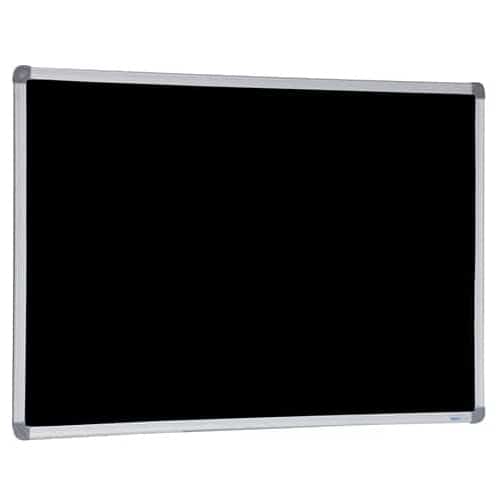

With the rise of digital classrooms, interactive displays, and modern teaching tools, many people assume chalkboards are a thing of the past. However, the reality is a bit more nuanced.
While whiteboards and digital solutions have become more common, chalkboards are still used in schools today – particularly in certain environments and teaching styles.
Are Chalkboards Still Used in Schools?
With the rise of digital classrooms, interactive displays, and modern teaching tools, many people assume chalkboards are a thing of the past. However, the reality is a bit more nuanced.
While whiteboards and digital solutions have become more common, chalkboards are still used in schools today – particularly in certain environments and teaching styles.
Why Chalkboards Were Traditionally Used?
Chalkboards have been a classroom staple for decades due to their simplicity, affordability, and reliability.
They offered teachers a large, reusable surface to explain concepts, solve problems, and communicate visually with students. Before the introduction of whiteboards and digital displays, chalkboards were the standard across most classrooms worldwide.
Are Chalkboards Still Used Today?
Yes – chalkboards are still used in some schools, but their presence has decreased significantly.
You’re more likely to find chalkboards in:
- Older school buildings that haven’t been upgraded
- Art rooms or creative classrooms
- Budget-conscious environments
- Specialty teaching spaces
However, in many modern classrooms, chalkboards have been replaced by whiteboards or dry erase boards, which offer cleaner, lower-maintenance alternatives.
Shop our Most Popular Categories
Why Many Schools Have Switched to Whiteboards?
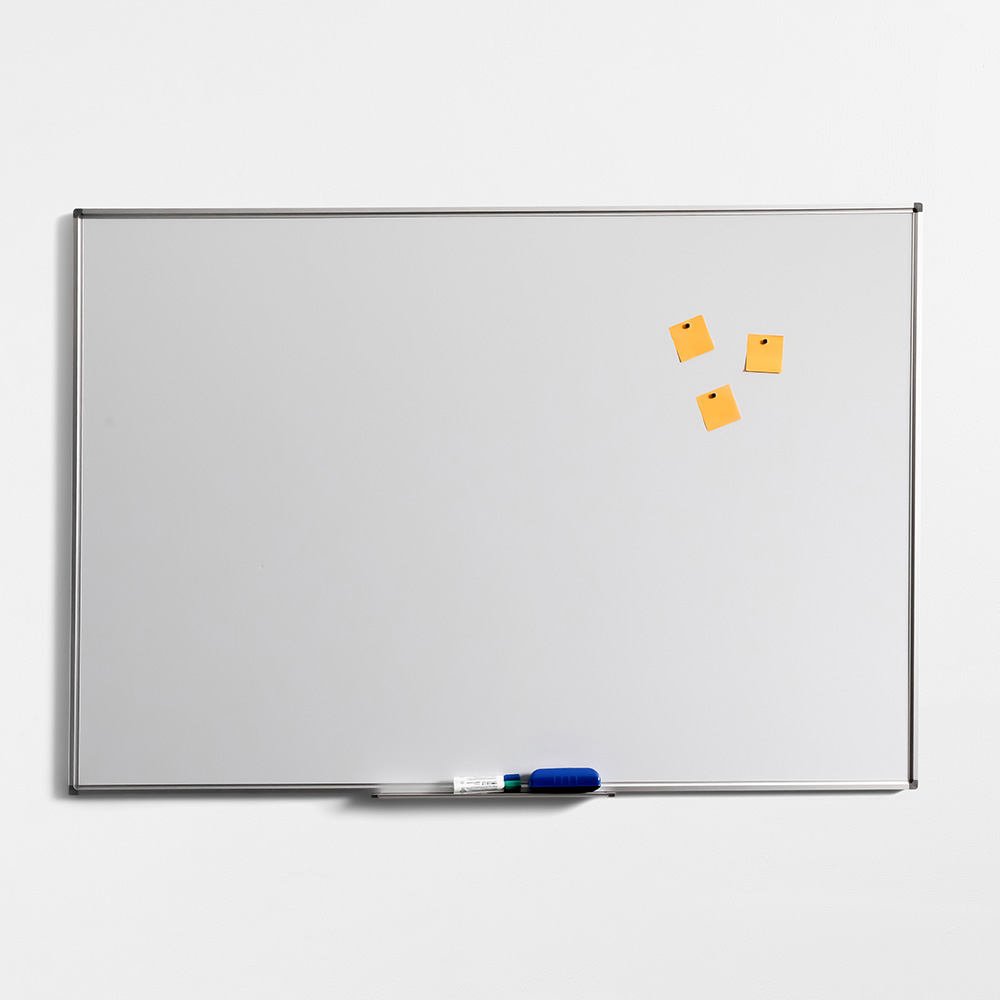
Over time, schools have increasingly adopted whiteboards due to several practical advantages.
- Cleaner and Low Maintenance – Whiteboards don’t produce dust like chalkboards, making them easier to clean and maintain. This is especially important in classrooms where cleanliness and air quality are a priority.
- Better Visibility – Whiteboards typically provide a brighter, clearer writing surface, making text easier to read from a distance.
- Compatibility with Modern Tools – Whiteboards work seamlessly with markers, magnets, and accessories, and they integrate well with modern teaching environments.
- Durability and Longevity – Higher-quality whiteboards, particularly porcelain or glass boards, resist staining and wear better than traditional chalkboards.
Chalkboards vs Whiteboards: Which Is Better?
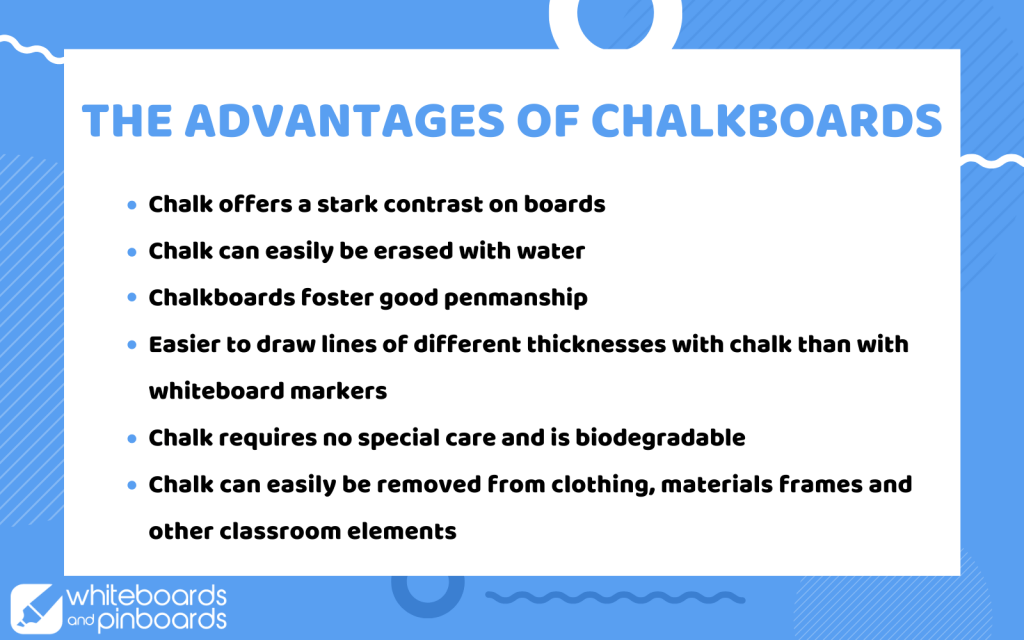
Both chalkboards and whiteboards have their advantages, and the best choice depends on the environment and teaching needs.
Chalkboards:
- Lower upfront cost
- No marker ink required
- Suitable for traditional teaching styles
Whiteboards:
- Cleaner and dust-free
- Easier to maintain
- More versatile for modern classrooms
- Better suited to high-use environments
In most cases, schools prefer whiteboards due to their convenience, hygiene, and compatibility with modern learning spaces.
The Future of Classroom Boards
Today’s classrooms often use a mix of tools, including:
- Whiteboards and dry erase boards
- Interactive digital displays
- Glass boards and modern writing surfaces
- Pinboards and display boards
While chalkboards still have a place, modern board solutions dominate due to their versatility, cleanliness, and long-term performance.
Choosing the Right Board for Your Classroom
When selecting a board for your space, consider:
- Frequency of use
- Maintenance requirements
- Visibility and readability
- Budget and long-term value
For most schools and educational environments, upgrading to a high-quality whiteboard or modern writing surface provides the best balance of performance and practicality.