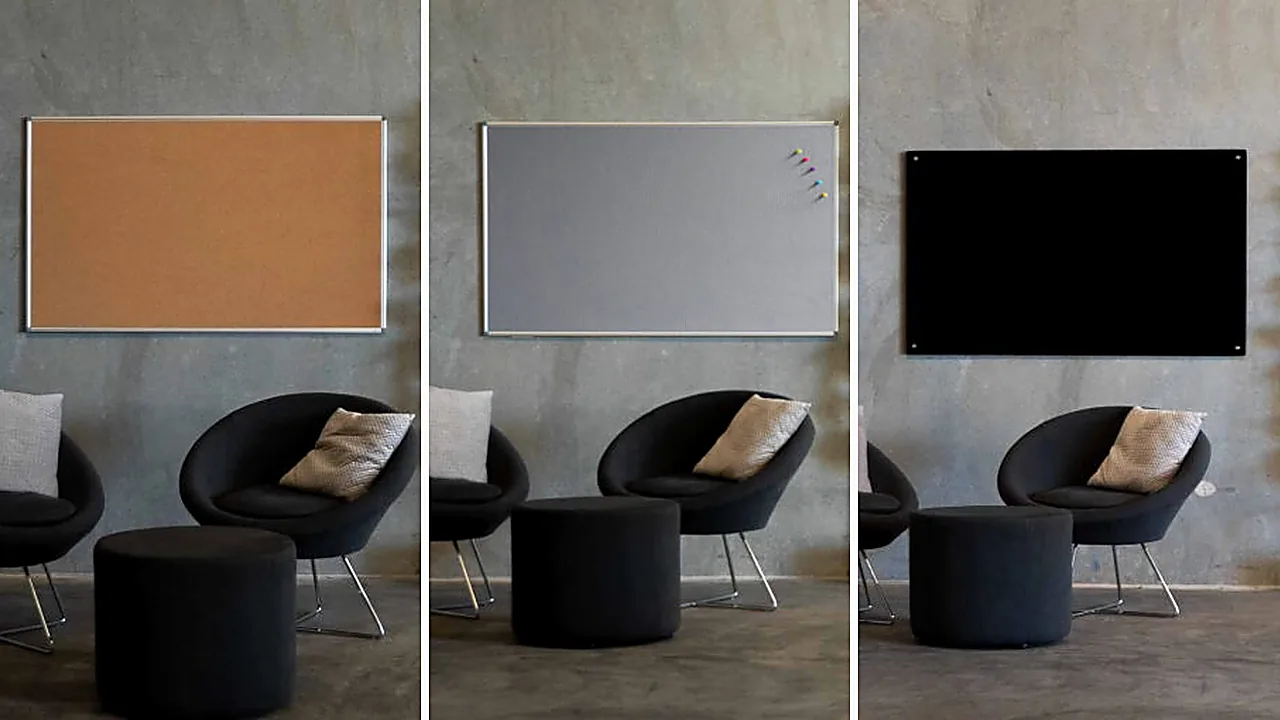
Cork, felt and fabric pinboards all provide reusable display space, but they differ in appearance, pinning performance, colour choice, accessory compatibility and suitability for repeated commercial use.
A corkboard is generally the most straightforward option for everyday notices and cost-conscious projects. A feltboard provides a clean commercial finish with reliable pinning performance. A fabric or velour pinboard is usually the strongest choice where colour selection, modern styling or hook-and-loop compatibility is important.
The right surface depends on what will be displayed, how often materials change, where the board will be installed and whether the pinboard also needs to contribute to the room’s interior design or acoustic treatment.
1. Understand the Main Pinboard Surface Types
The term pinboard can describe several different products, including cork boards, felt boards, fabric notice boards, velour pinboards and pinnable acoustic panels.
All are designed to hold information using pins or compatible fastening methods, but they are not interchangeable.
Common surface options include:
• Natural cork
• Compressed felt
• Commercial upholstery-style fabric
• Non-woven velour fabric
• Hook-and-loop receptive fabric
• Self-healing specialist surfaces
• Pinnable acoustic material
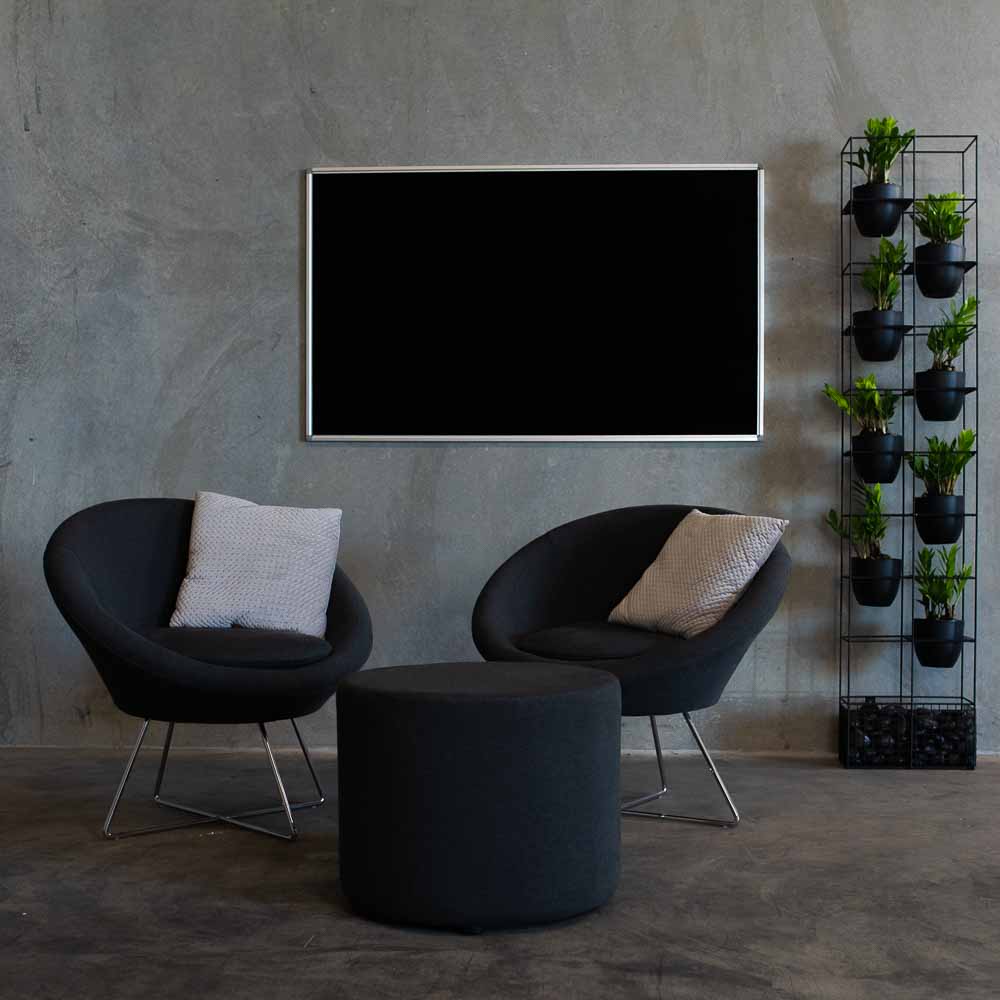
The complete range of pinboards includes fixed, mobile, framed, frameless, custom and acoustic formats for offices, classrooms and commercial environments.
Before comparing appearance, identify the board’s main purpose.
Ask:
• Will documents change daily, weekly or occasionally?
• Will users attach paper, cards, photographs or heavier samples?
• Are pins the only fastening method required?
• Does the surface need to accept hook-and-loop tape?
• Will the board be highly visible to customers or visitors?
• Is a particular colour required?
• Does the space also need acoustic absorption?
• Will the board be fixed or moved between rooms?
These requirements will usually narrow the material choice quickly.
2. Compare Pinning Performance
A pinboard needs enough resistance to hold material securely without making pins unnecessarily difficult to insert.
Pinning performance can be affected by:
• Surface material
• Core density
• Pin length
• Thickness of the displayed material
• Number of layers attached
• Frequency of use
• Condition of the board
• Angle at which pins are inserted
Cork Pinning Performance
Cork is familiar, easy to use and suitable for conventional push pins and drawing pins.
It works well for:
• Printed notices
• Reminders
• Photographs
• Lightweight cards
• Classroom material
• General workplace communication
Repeated pinning in exactly the same area may eventually leave visible holes or wear. Rotating the position of notices can help distribute use across the surface.
Felt Pinning Performance
Commercial feltboards can provide dependable resistance for repeated pin use. Their denser construction may also support longer pins where several sheets or thicker materials are displayed.
Felt is a practical option for:
• Staff notices
• Education resources
• Rosters
• Project information
• Shared office communication
• Community displays
Fabric and Velour Pinning Performance
Fabric-covered boards vary according to the surface and the core beneath it.
A quality commercial fabric or velour pinboard can support regular pinning while providing a more decorative finish than traditional cork.
Selected fabric surfaces may also accept compatible hook-and-loop fasteners, making them useful where users frequently reposition larger visual materials.
Length × width × ceiling height
For example, a room measuring 6 metres long, 4 metres wide and 2.7 metres high has a volume of 64.8 cubic metres.
This figure does not directly provide a panel count, but it helps compare rooms and understand the scale of the treatment required.
Also measure the usable wall and ceiling areas. Do not include windows, doors or surfaces where panels cannot be installed unless the chosen system can safely span those areas.
3. Choose Cork for Familiar, Everyday Notice Display
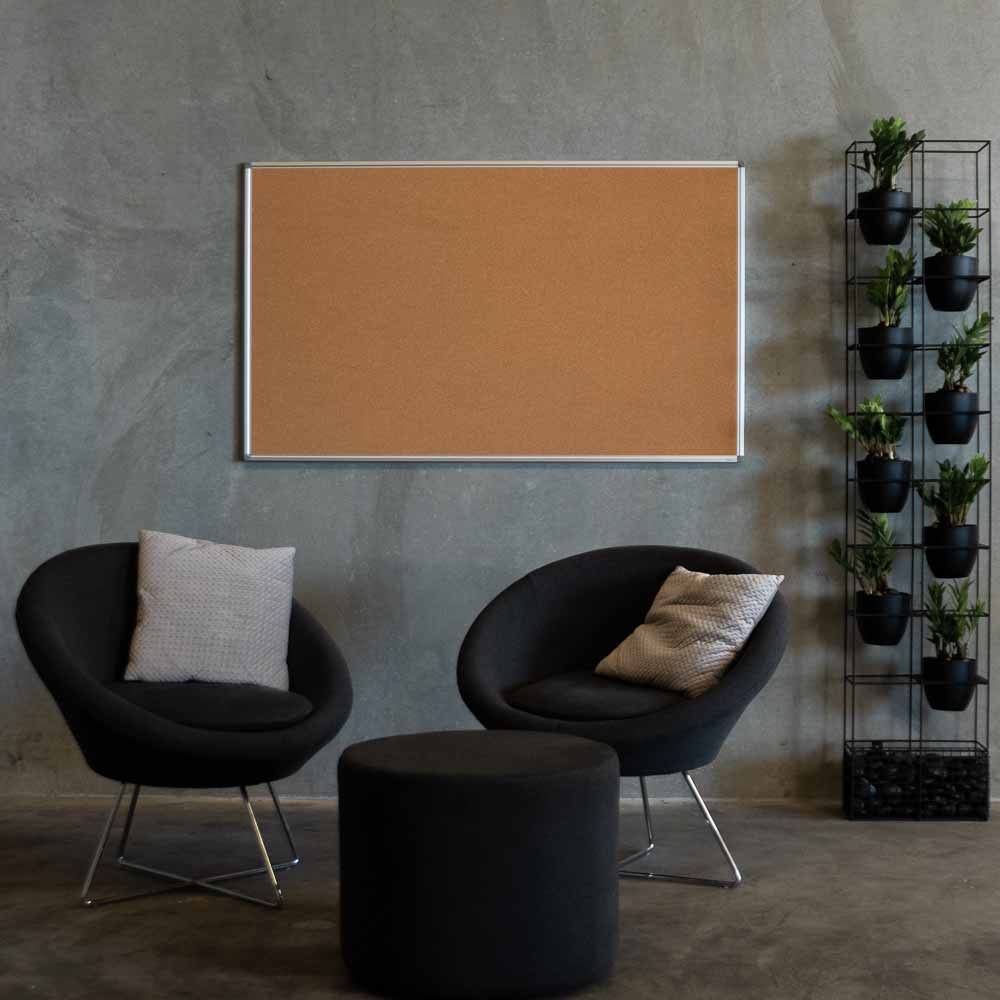
Corkboards remain popular because they are simple, recognisable and easy to integrate into offices, schools, clubs and home workspaces.
A cork pinboard may be the right choice when:
• The project has a limited budget
• The board is primarily functional
• A natural surface is preferred
• Notices are lightweight
• Colour choice is not important
• Users are familiar with standard push pins
• The board will receive moderate use
• A traditional notice-board appearance is acceptable
The corkboard range includes wall-mounted, custom and combination formats for general display applications.
Advantages of Cork Pinboards
Cork provides:
• A familiar natural appearance
• Straightforward pinning
• Clear contrast against white paper
• Broad compatibility with standard push pins
• Practical everyday display space
• Cost-effective options
• Suitability for offices, classrooms and shared areas
Limitations of Cork Pinboards
Cork may be less suitable when:
• A specific corporate colour is required
• The board forms part of a premium interior
• Hook-and-loop compatibility is essential
• The surface receives intensive repeated pinning
• The room requires a large decorative feature
• Acoustic performance is an important objective
Cork can still work in a contemporary space when the frame, size and surrounding interior are selected carefully.
4. Choose Felt for a Practical Commercial Finish
The correct treatment area depends on the room rather than a universal percentage.
Important factors include:
• Room purpose
• Occupancy
• Ceiling height
• Amount of glazing
• Existing ceiling treatment
• Panel absorption performance
• Required speech clarity
• Noise source locations
• Desired visual outcome
• Budget
A meeting room may only require treatment on selected opposing walls. A large classroom may benefit from both wall and ceiling absorption. An open-plan office may require several treatment types distributed across a much larger area.
Avoid selecting an arbitrary coverage percentage without considering the chosen product and the room’s acoustic conditions.
For preliminary budgeting:
- Identify the largest reflective surfaces.
- Select the surfaces that can practically receive treatment.
- Estimate the area available on each surface.
- Compare that area with the selected panel dimensions.
- Review the expected acoustic performance of the proposed product.
- Adjust the quantity based on room use and placement.
Large or acoustically demanding spaces may require a formal assessment rather than a simple area calculation.
5. Match the Quantity to the Room T5. Choose Fabric or Velour for Colour and Design Flexibility
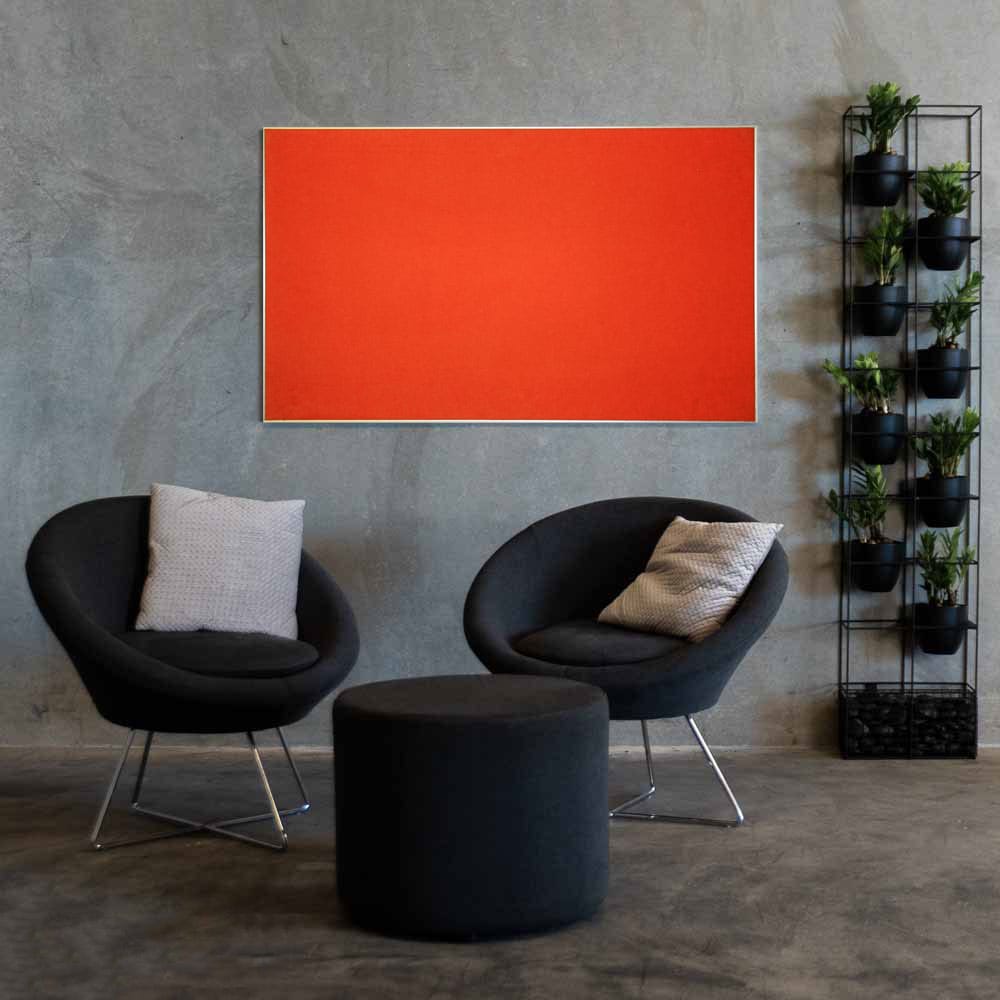
Fabric and velour pinboards are suited to environments where appearance is part of the buying decision.
They can be coordinated with:
• Corporate branding
• Classroom colour schemes
• Office furniture
• Acoustic products
• Interior finishes
• Departmental identification
• Wayfinding systems
• Feature walls
Commercial fabric pinboards may be framed, slimline or fully wrapped for a frameless appearance.
Selected surfaces also accept compatible hook-and-loop fastening, allowing users to attach materials without relying solely on pins.
This can be useful for:
• Presentations
• Classroom resources
• Design samples
• Planning cards
• Lightweight display panels
• Frequently repositioned material
• Project displays
The available Velcro pinboards include pinnable fabric options designed for offices, learning spaces and commercial interiors.
Advantages of Fabric Pinboards
Fabric and velour surfaces may provide:
• Broad colour choice
• A modern professional appearance
• Framed and frameless formats
• Pin compatibility
• Hook-and-loop compatibility on selected products
• Better integration with workplace interiors
• Custom sizing options
• Suitability for large feature installations
Limitations of Fabric Pinboards
Premium fabric products may cost more than basic cork or felt boards.
Buyers should also confirm:
• Whether pins are accepted
• Whether hook-and-loop fasteners are accepted
• Which side of the fastening tape should be used
• Whether the chosen colour shows dust or lint
• How the surface should be cleaned
• Whether the product is made to order
• Whether mounting hardware is included
• Whether the selected fabric provides acoustic benefits
Do not assume every upholstered-looking surface accepts the same fastening methods.
6. Consider Acoustic Pinboards for Dual-Purpose Walls
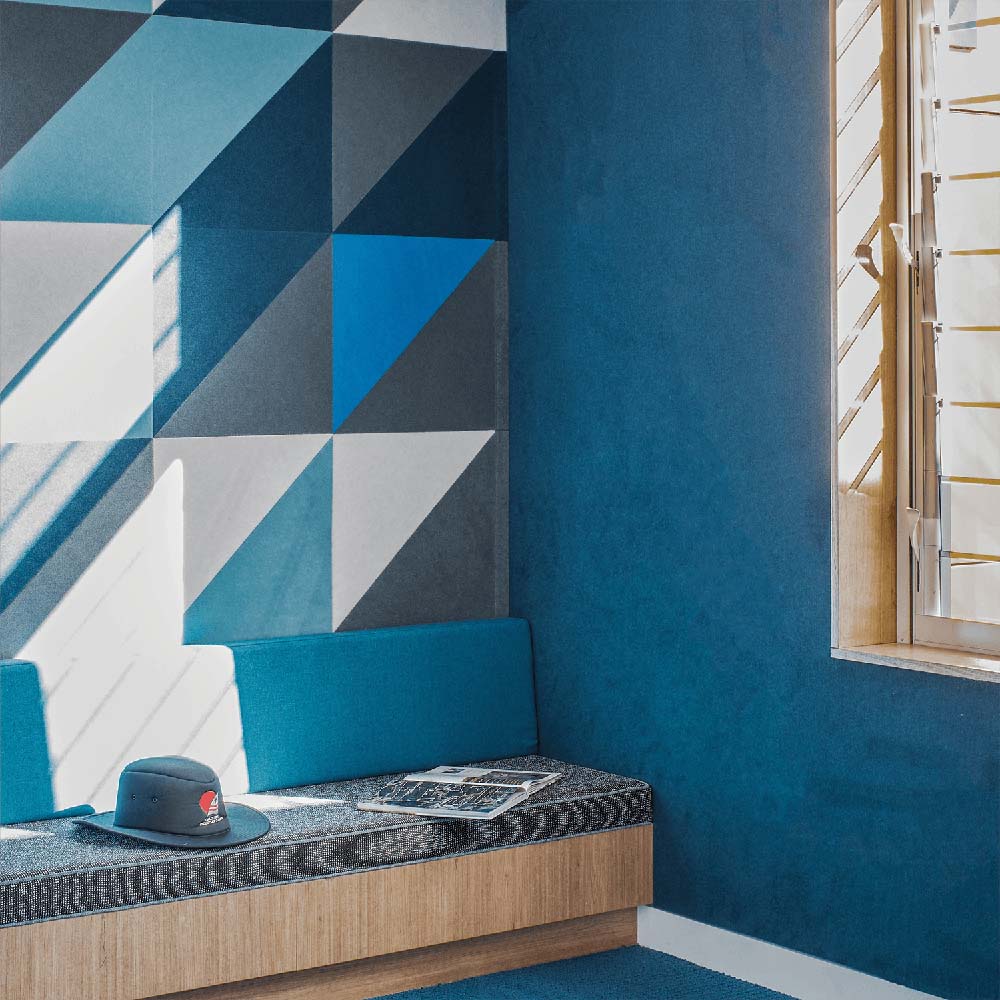
A conventional pinboard is primarily a display product. An acoustic pinboard combines a pinnable surface with material designed to absorb some reflected sound within the room.
This can be useful where wall space needs to perform more than one function.
Potential applications include:
• Open-plan offices
• Classrooms
• Libraries
• Meeting rooms
• Training facilities
• Breakout spaces
• Staff rooms
• Creative studios
• Shared commercial areas
The acoustic pinboard range includes wall fabrics and panel products that can provide pinnable display space while contributing acoustic absorption.
An acoustic pinboard may offer better value than installing a notice board over a separate acoustic treatment.
However, not every fabric pinboard is an acoustic panel. Confirm the product construction and acoustic data before treating the terms as interchangeable.
Acoustic pinboards are designed to help manage reverberation inside a room. They do not automatically stop sound passing through walls, doors, ceilings or floors.
7. Decide Whether You Need Pins, Velcro or Both
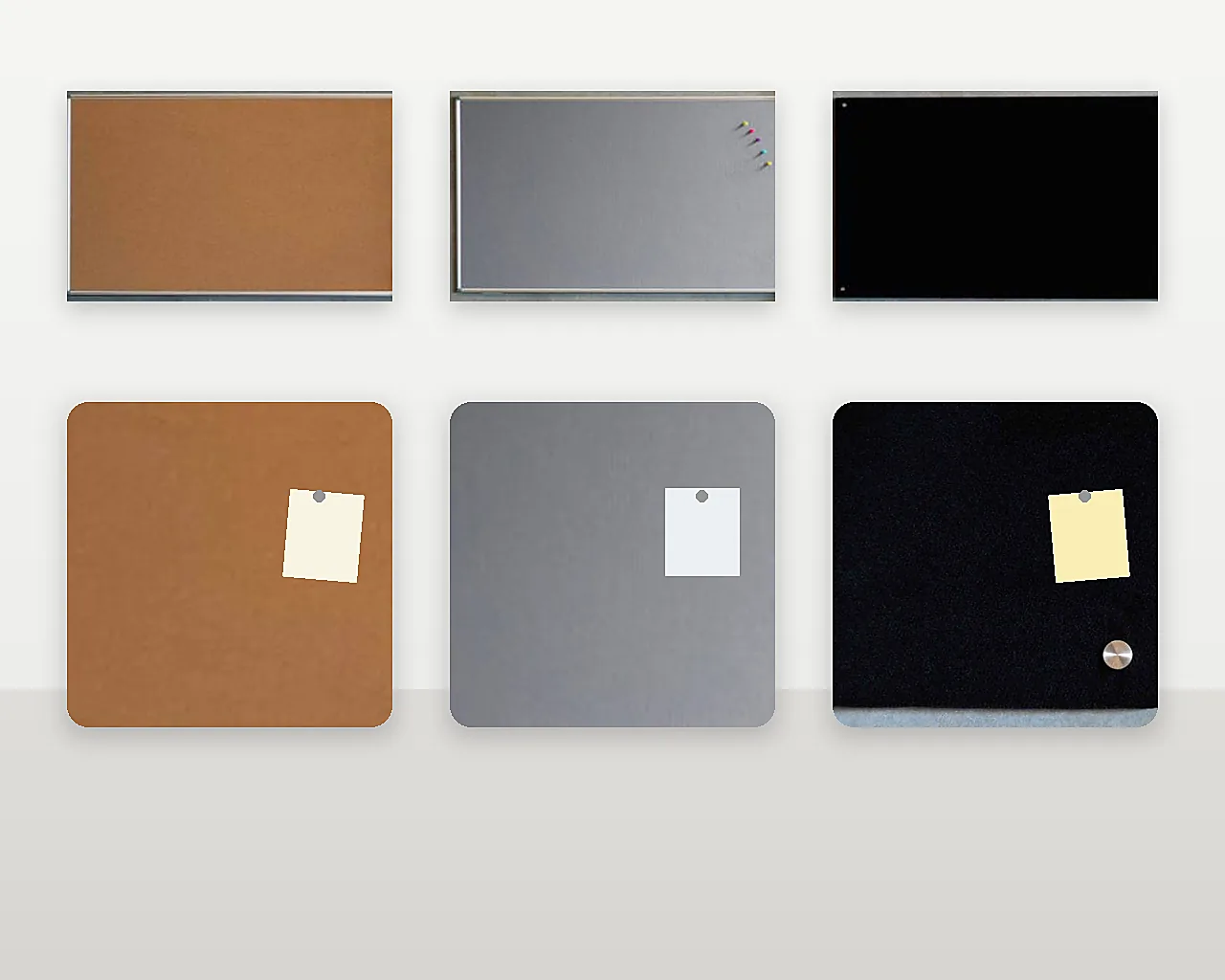
The intended fastening method is one of the most important buying considerations.
Pins
Pins are suitable for:
• Paper notices
• Photographs
• Thin card
• Rosters
• Calendars
• Lightweight learning resources
• Temporary instructions
Check that the selected pin length suits the surface and the material being attached.
Hook-and-Loop Fasteners
Hook-and-loop fastening can be useful for:
• Larger posters
• Laminated cards
• Reusable teaching resources
• Display headings
• Project boards
• Presentation materials
• Items moved frequently
The correct hook-and-loop component must be used with the selected surface. Adhesive-backed strips attached to posters should also be checked for suitability and weight.
Mixed Use
A board that accepts both pins and hook-and-loop fasteners provides greater flexibility.
Mixed-use surfaces are particularly useful in:
• Schools
• Training rooms
• Design studios
• Project areas
• Collaborative workplaces
• Exhibition spaces
Avoid attaching heavy items without confirming the board’s capacity and fastening method. A surface that accepts Velcro does not necessarily support every object or adhesive product.
8. Match the Surface to the Environment
Different settings place different demands on a notice board.
Offices
Office pinboards commonly display:
• Staff announcements
• Rosters
• Safety information
• Project updates
• Social events
• Policies
• Performance information
• Training notices
Cork or felt may suit internal staff areas where function and value are the priorities.
Fabric and velour boards can provide a more coordinated appearance in:
• Reception areas
• Boardrooms
• Client-facing spaces
• Collaborative zones
• Design-led offices
• Executive environments
Schools and Education Facilities
Education pinboards may need to hold:
• Student work
• Lesson resources
• Timetables
• Classroom themes
• Behaviour charts
• Event information
• School notices
• Visual learning material
A colourful fabric surface can become part of the room design, while felt and cork remain practical for general classroom communication.
Where resources are changed frequently, hook-and-loop compatibility may reduce reliance on pins.
Healthcare and Government Facilities
These environments often require clear and structured information display.
Consider:
• Surface durability
• Ease of maintenance
• Visibility
• Installation security
• Appropriate placement
• Information confidentiality
• Fire and building requirements
• Compatibility with the facility’s cleaning processes
Publicly accessible boards may require a lockable display case where documents must remain protected.
Creative Studios
Fabric and velour boards can support:
• Mood boards
• Material samples
• Design references
• Colour palettes
• Project timelines
• Photography
• Concept development
Large frameless surfaces can provide more usable display area and a cleaner background for creative work.
Community and Hospitality Spaces
Cork and feltboards are useful for:
• Community announcements
• Local events
• Menus and promotions
• Club information
• Visitor notices
• Staff communication
Consider whether the board will be exposed to public handling, food-service conditions, moisture or direct sunlight.
9. Compare Framed, Slimline and Frameless Designs
The frame affects appearance, installation and how the board integrates with the wall.
Standard Aluminium Frames
A standard aluminium frame provides:
• A familiar commercial appearance
• Defined board edges
• Protection around the surface
• Straightforward wall mounting
• Suitability for offices and classrooms
This format works well for cork and felt boards where function is the main priority.
Slimline Frames
Slimline frames provide a more refined border while retaining the definition and protection of a framed board.
They can suit:
• Modern offices
• Training rooms
• Reception areas
• Boardrooms
• Education facilities
• Professional practices
Frameless Pinboards
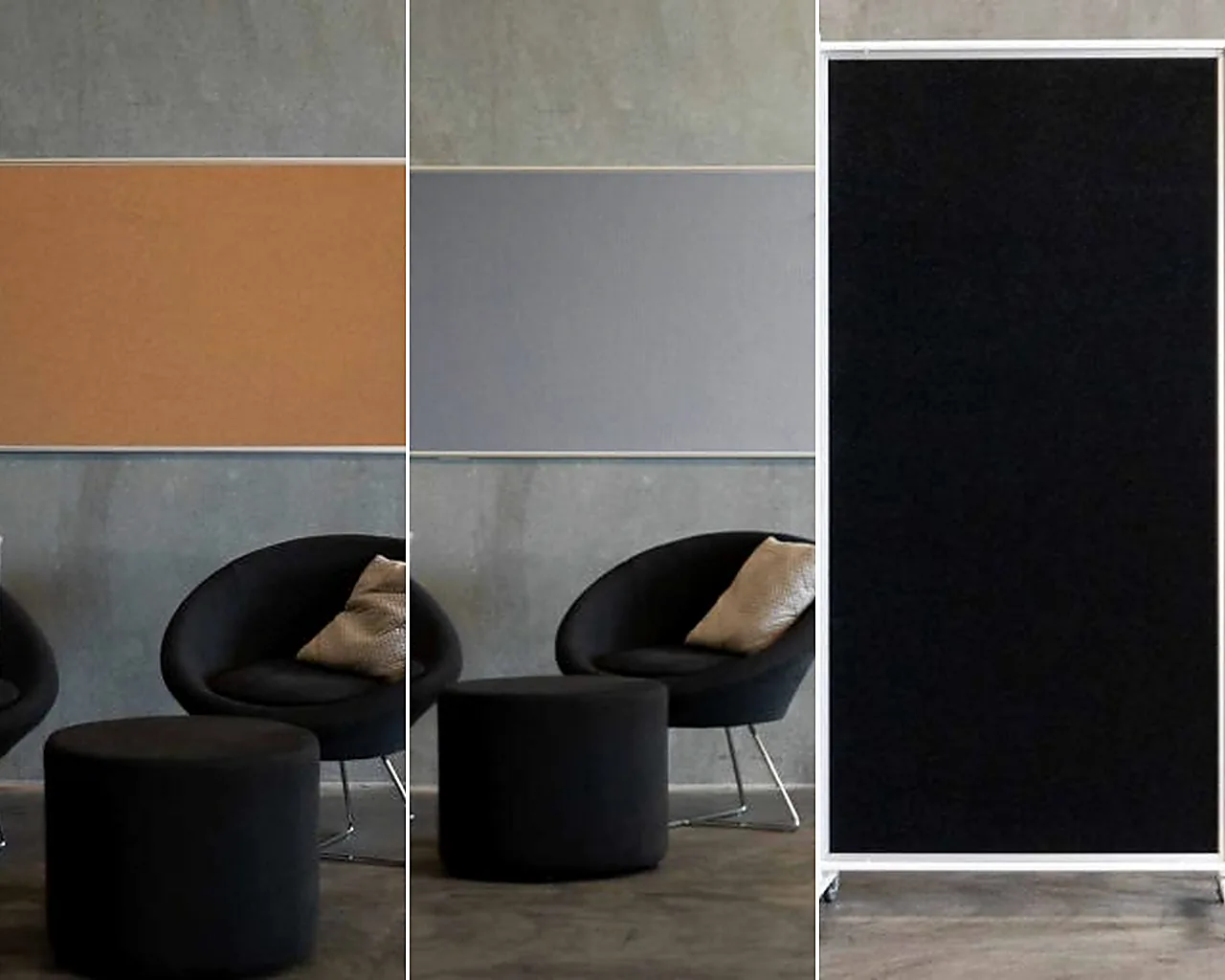
Frameless or fully wrapped boards create a cleaner feature-wall appearance.
They can be installed:
• As one large board
• In aligned groups
• In different colours
• In portrait or landscape orientation
• As modular wall displays
• Around furniture and architectural features
Check how the board is mounted and whether visible fixings form part of the design.
10. Select the Right Size and Orientation
The board should be sized around the amount of material displayed rather than the empty wall alone.
Measure:
• Clear wall width
• Clear wall height
• Furniture below the board
• Doors and windows
• Light switches and outlets
• Normal viewing distance
• Comfortable pinning height
• Required number of notices
• Space between documents
• Delivery and installation access
Landscape Pinboards
Landscape boards suit:
• Broad staff notice areas
• Multiple document columns
• Timelines
• Classroom displays
• Project boards
• Shared communication walls
Portrait Pinboards
Portrait boards can suit:
• Narrow wall sections
• Rosters
• Vertical schedules
• Wayfinding information
• Small reception areas
• Individual department displays
Multiple Pinboards
Several smaller boards may be better than one large board when information needs to be separated by:
• Department
• Subject
• Location
• Date
• Priority
• Confidentiality
• Staff and public access
Custom sizing can be useful where standard board dimensions leave awkward gaps or do not align with the intended layout.
11. Consider Fixed, Mobile and Custom Pinboards
Surface material is only one part of the decision.
Fixed Pinboards
Wall-mounted boards suit permanent communication locations.
They provide:
• Stable display space
• No mobile base using floor area
• Consistent visibility
• Broad size options
• Suitability for long-term workplace use
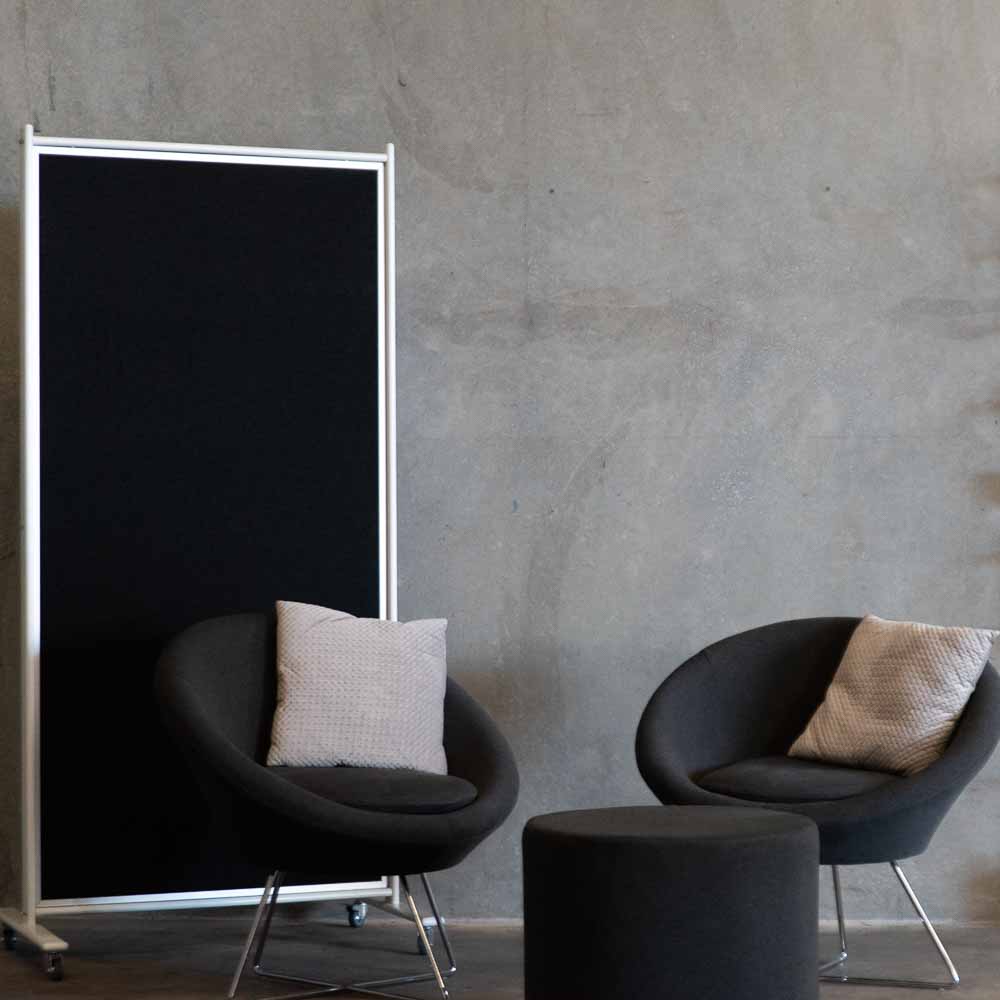
Mobile Pinboards
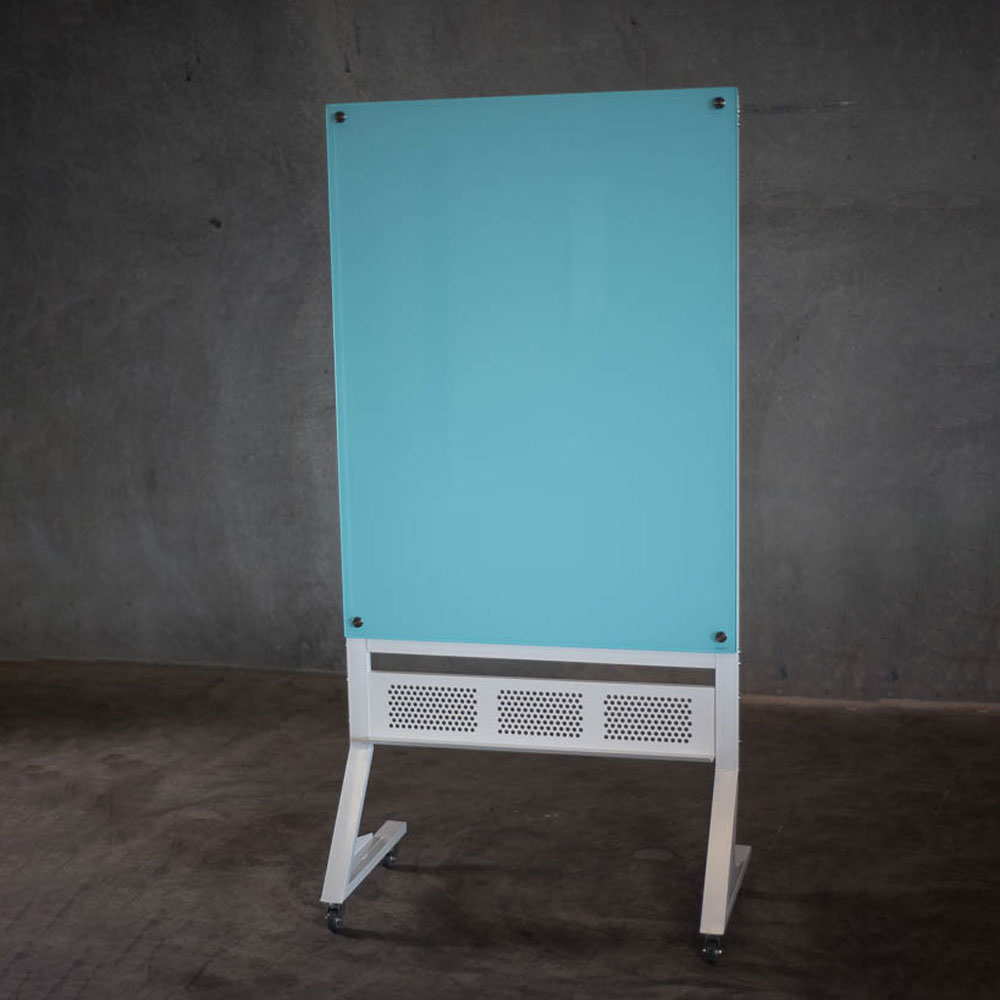
Mobile pinboards can support:
• Training sessions
• Temporary events
• Flexible classrooms
• Workshops
• Exhibitions
• Room division
• Shared use between departments
Check the complete frame dimensions, castor locks, stability and storage position before ordering.
Custom Pinboards
A custom board may be worthwhile when:
• A non-standard size is required
• The surface must match a brand colour
• Several boards need coordinated dimensions
• The wall contains unusual features
• A large frameless installation is planned
• The display forms part of a fitout
• A specific frame style is required
Allow additional time for made-to-order products and confirm the final size, orientation, colour and installation details before approval.
12. Plan Cleaning and Maintenance
Pinboards require less routine cleaning than whiteboards, but regular care helps maintain their appearance.
Corkboard Care
For cork surfaces:
• Remove pins carefully
• Avoid repeatedly using one small area
• Dust the surface with a soft cloth
• Avoid saturating the cork
• Follow the product care instructions
• Replace damaged pins
Feltboard Care
For felt surfaces:
• Remove dust with a soft brush or suitable vacuum attachment
• Treat marks according to the manufacturer’s instructions
• Avoid pulling the surface with damaged pins
• Keep adhesives away unless approved
• Rotate frequently used display areas
Fabric and Velour Care
For fabric surfaces:
• Follow the specific care guide
• Remove lint with a suitable soft tool
• Address spills promptly
• Avoid harsh chemicals
• Use approved hook-and-loop products
• Test cleaning methods in an inconspicuous area
Do not use general-purpose household cleaning chemicals without checking compatibility.
13. Avoid Common Pinboard Buying Mistakes
Choosing by Colour Alone
The board must also support the required pins, Velcro, display weight and usage frequency.
Assuming All Fabric Boards Accept Velcro
Only use hook-and-loop fastening where the product specification confirms compatibility.
Selecting a Board That Is Too Small
Allow space between notices so information remains readable and organised.
Ignoring Pin Length
Pins that are too short may not hold several sheets, while unnecessarily long pins may be inconvenient or unsuitable.
Expecting a Standard Fabric Pinboard to Provide Acoustic Treatment
A pinnable fabric surface is not automatically an acoustic panel.
Installing the Board Too High
Users should be able to reach the main display area comfortably.
Forgetting Furniture and Door Clearance
Measure the complete wall and surrounding fixtures before ordering.
Buying a Mobile Board Without Planning Storage
Mobile boards require floor space and a safe location when not in use.
Using Unsuitable Adhesives
Tape and adhesive products may leave residue or damage fabric, felt or cork.
Overlooking Custom Lead Times
Confirm manufacturing and delivery requirements before relying on a custom board for a scheduled project.
Final Pinboard Surface Checklist
Before ordering, confirm:
• Primary display purpose
• Frequency of document changes
• Pinning requirements
• Hook-and-loop requirements
• Display material weight
• Preferred cork, felt or fabric surface
• Required colour
• Acoustic requirements
• Fixed or mobile format
• Framed or frameless design
• Board width and height
• Portrait or landscape orientation
• Custom sizing requirements
• Viewing distance
• Comfortable reach
• Wall construction
• Delivery access
• Installation method
• Cleaning requirements
• Replacement accessory availability
Conclusion
Choose cork when you need a familiar, practical and cost-effective notice board for everyday paper displays.
Choose felt when you want dependable commercial pinning performance with a clean, neutral appearance.
Choose fabric or velour when colour, modern presentation, frameless styling or hook-and-loop compatibility forms part of the requirement.
Consider an acoustic pinboard when the wall also needs to absorb reflected sound. Confirm the acoustic specification rather than assuming every fabric surface provides meaningful sound treatment.
The strongest result comes from matching the surface to the information displayed, the fastening method, the room and the expected level of use.
For exclusive educator discounts, visit our Education Hub!