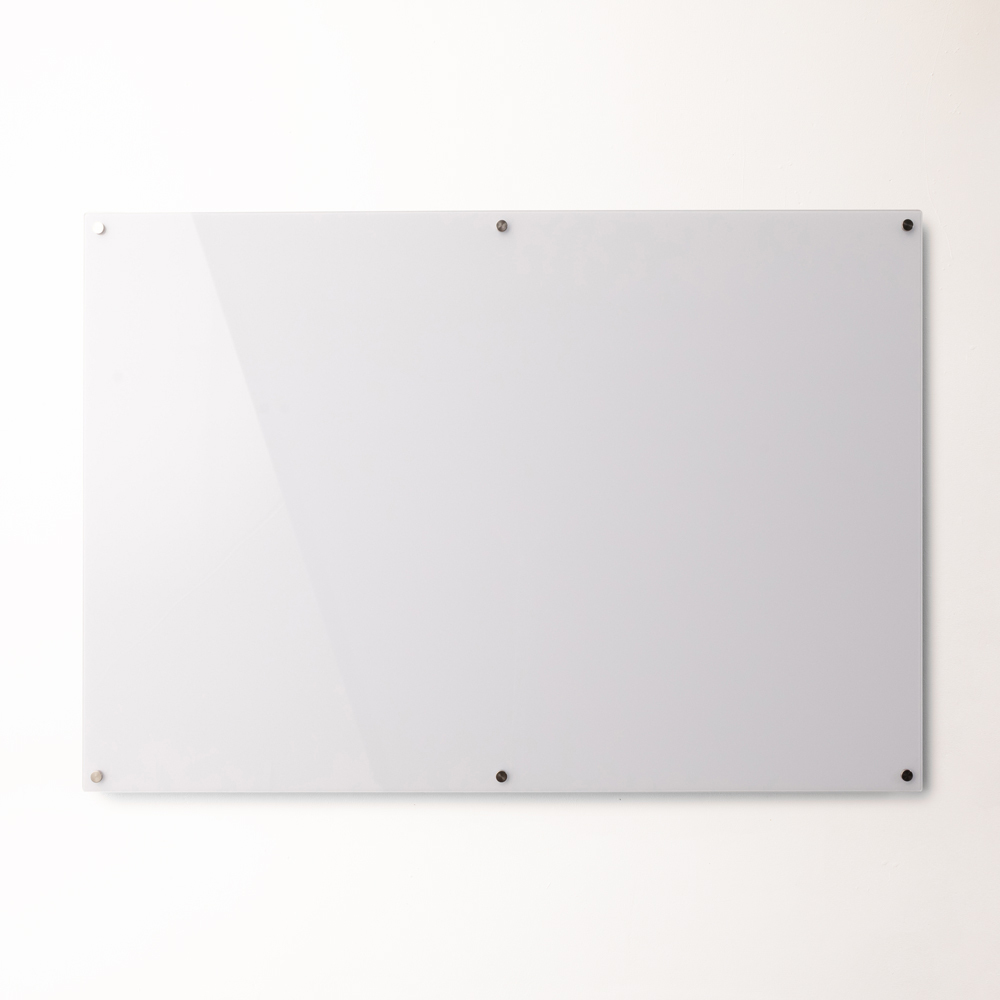

A magnetic whiteboard combines a dry-erase writing surface with a steel-backed surface that allows compatible magnets to attach directly to the board.
That extra functionality can be valuable in offices, classrooms, training rooms and project spaces where users regularly display documents, schedules, diagrams, photos or planning materials alongside handwritten notes.
A non-magnetic whiteboard can still provide an effective writing surface and may be the more economical choice where the board will only be used for writing and erasing.
The right choice therefore depends less on whether a magnetic whiteboard is inherently “better” and more on how the board will actually be used.
Whiteboards and Pinboards supplies a broad range of whiteboards for Australian workplaces, schools and commercial environments, including magnetic, porcelain, fixed and mobile options.
1. What Is a Magnetic Whiteboard?
A magnetic whiteboard is a dry-erase board with a surface or backing that attracts magnets.
This allows the board to perform two functions:
- Writing and drawing with compatible whiteboard markers
- Holding documents and other lightweight materials with magnets
Common uses include attaching:
- Printed schedules
- Reference documents
- Photos
- Charts
- Worksheets
- Notices
- Project cards
- Rosters
- Planning templates
The magnetic function can be particularly useful when information changes frequently.
Instead of rewriting everything directly onto the board, users can reposition printed material while continuing to use the surrounding surface for notes and annotations.
2. What Is a Non-Magnetic Whiteboard?
A non-magnetic whiteboard provides the familiar dry-erase writing function without the ability to hold standard magnets.
It can still be suitable for:
- Meeting notes
- Brainstorming
- Classroom teaching
- Presentations
- To-do lists
- Training sessions
- Daily planning
If users never intend to attach anything to the board, paying specifically for magnetic functionality may offer little practical benefit.
This makes the intended workflow an important part of the buying decision.
3. Magnetic vs Non-Magnetic Whiteboards at a Glance
A Magnetic Whiteboard May Be Better If You Need To:
- Attach printed documents
- Display temporary notices
- Move planning cards around
- Hold diagrams while annotating them
- Combine written and printed information
- Use magnetic whiteboard accessories
- Build visual project boards
- Frequently update displayed information
A Non-Magnetic Whiteboard May Be Enough If You Mainly Need To:
- Write meeting notes
- Teach from the board
- Brainstorm
- Draw diagrams
- Record temporary information
- Present information that does not need attached documents
The important question is not simply:
“Do I want a magnetic board?”
It is:
“Will attaching material directly to the writing surface improve how this room works?”
4. Why Magnetic Whiteboards Are Popular in Offices
Commercial workplaces often use whiteboards for more than handwriting.
A project team might need to display:
- Project timelines
- Floor plans
- Printed reports
- Workflow cards
- Photos
- Meeting agendas
while also adding handwritten:
- Deadlines
- Comments
- Tasks
- Arrows
- Priorities
A magnetic whiteboard allows both information types to occupy the same working surface.
Project Planning
Magnets allow printed project information to be moved without repeatedly using tape, adhesive or pins.
This can work well for:
- Agile teams
- Construction planning
- Sales pipelines
- Production scheduling
- Marketing calendars
- Operational workflows
Meeting Rooms
A magnetic whiteboard can also support meetings where printed documents need to remain visible while participants discuss and annotate related information.
For workplaces that only use the board for occasional meeting notes, however, this additional functionality may not be necessary.
5. Magnetic Whiteboards in Classrooms
Schools are another environment where magnetic surfaces can provide useful flexibility.
Teachers can combine writing with:
- Worksheets
- Flash cards
- Printed diagrams
- Student work
- Magnetic learning aids
- Visual prompts
This can be particularly useful where the board is used continuously throughout the school day.
Primary Classrooms
Teachers may regularly reposition visual teaching resources alongside written instructions.
Secondary Classrooms
Magnetic boards can hold:
- Diagrams
- Maps
- Reference materials
- Formula sheets
- Printed examples
while leaving room for lesson notes.
Specialist Learning Areas
Subjects such as:
- Mathematics
- Science
- Music
- Languages
- Geography
may benefit from temporary visual materials that can be positioned and removed quickly.
The advantage is flexibility rather than magnetism itself.
If the classroom only requires a durable writing surface, surface quality may deserve greater priority.
6. Surface Material Still Matters
Magnetic capability should not be the only specification considered.
The whiteboard surface affects:
- Erasing performance
- Resistance to staining
- Resistance to ghosting
- Durability
- Suitability for frequent use
- Expected service life
Two magnetic whiteboards can therefore perform very differently if they use different writing surfaces.
7. Porcelain Magnetic Whiteboards for Heavy Use
Porcelain whiteboards are typically selected for environments where the board will receive frequent, long-term use.
Whiteboards and Pinboards offers porcelain whiteboards for offices, universities, schools and other demanding commercial settings.
Porcelain surfaces can be worth considering when the board will be:
- Written on throughout the day
- Cleaned repeatedly
- Installed permanently
- Used by many different people
- Expected to remain in service for an extended period
Many porcelain whiteboards are also magnetic.
This combination can provide both:
durable writing performance + magnetic display functionality
which can make them particularly suitable for high-use classrooms and meeting spaces.

8. Do You Need Porcelain Just to Get a Magnetic Board?
No.
Magnetic capability and surface durability are related specifications, but they are not the same decision.
A buyer should consider separately:
- Do I need a magnetic surface?
- How heavily will the writing surface be used?
For example:
Occasional Office Use
A general commercial magnetic whiteboard may provide sufficient functionality.
High-Use Classroom
A porcelain magnetic surface may justify the additional investment because durability matters as much as magnetism.
Training Room
The correct surface depends on how frequently the room is used and how often the board is written on and cleaned.
This prevents over-specifying boards in light-use rooms while under-specifying heavily used ones.
9. Magnetic Whiteboards Are Useful for Visual Planning
Visual planning is one of the strongest reasons to choose magnetic functionality.
Instead of permanently printing a planning layout onto the board, users can create flexible systems using magnets and removable materials.
Examples include:
Project Boards
Use magnets to position:
- Tasks
- Project stages
- Team responsibilities
- Milestones
Rosters
Printed staff names or shifts can be repositioned as requirements change.
Production Planning
Documents or cards can move between stages such as:
- Pending
- In progress
- Review
- Complete
Education Planning
Teachers can rearrange:
- Lesson components
- Activities
- Student groups
- Visual aids
A magnetic whiteboard can therefore become more than a writing board. It can function as a reusable visual workspace.
10. Magnetic Whiteboards Can Reduce Reliance on Adhesives
Documents attached to non-magnetic boards may require:
- Tape
- Adhesive putty
- Repositionable adhesive
- Separate noticeboard space
Those methods can be workable, but they are less convenient where documents change frequently.
Magnets provide a reusable attachment method without applying adhesive directly to the writing surface.
This can be useful in rooms where the same board regularly alternates between:
- Presentations
- Planning
- Notices
- Brainstorming
It also allows attached material to be moved quickly rather than peeled away and reattached.
11. Check Whether Your Existing Accessories Need Magnetism
Before choosing a board, look at how the room is already being used.
Do staff or teachers regularly use:
- Magnetic markers
- Magnetic pen holders
- Magnetic document holders
- Magnetic planning accessories
- Magnetic flipchart bars
- Board magnets
If so, replacing an existing magnetic whiteboard with a non-magnetic model may unexpectedly remove functionality people already rely on.
Whiteboards and Pinboards offers whiteboard accessories including magnets and magnetic accessories designed for compatible board surfaces.
Do Not Assume Every Magnet Is Suitable
Magnet strength varies.
A lightweight decorative magnet may perform differently from a stronger magnet designed to hold documents securely.
The weight and number of sheets being held also affect the result.
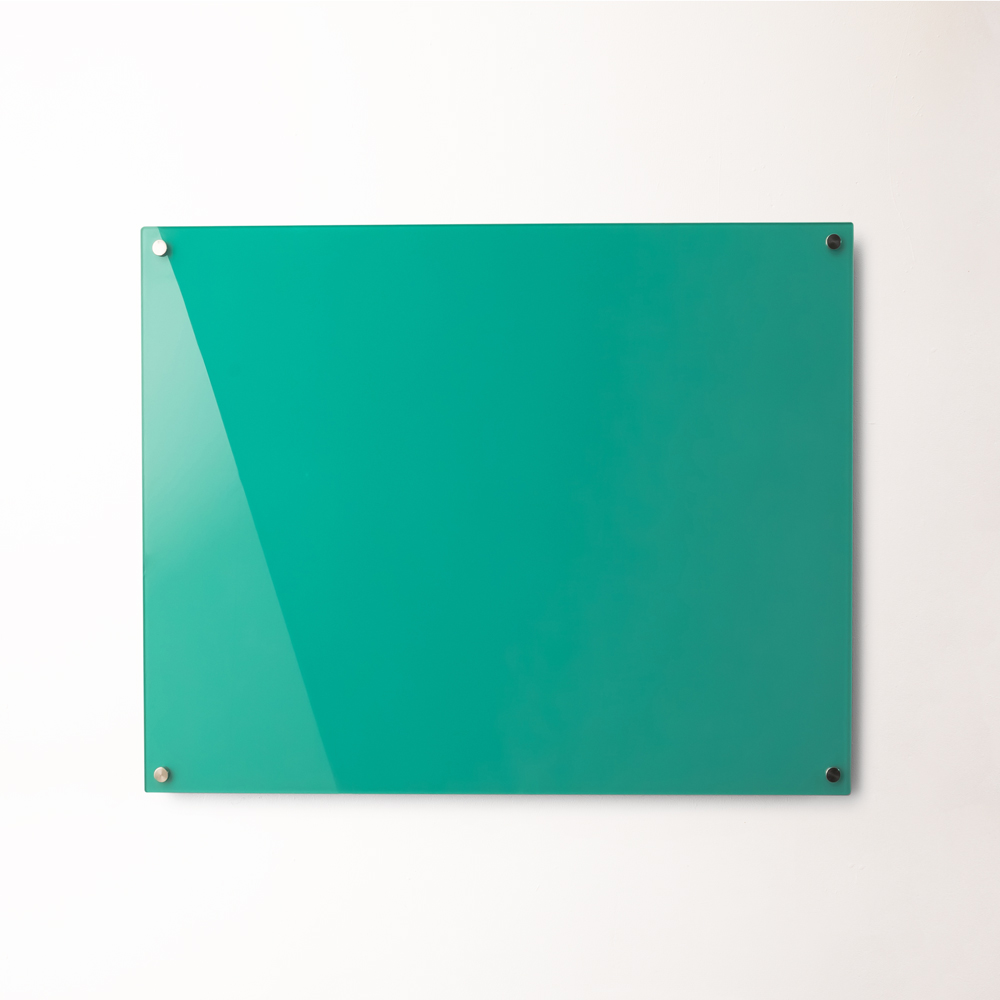
12. Glass Whiteboards Require Different Magnets
Glass whiteboards deserve separate consideration.
A glassboard may be magnetic, but standard whiteboard magnets may not necessarily provide enough holding force through the glass surface.
Magnetic glassboards can require stronger magnets designed specifically for the additional distance between the magnet and magnetic backing.
This is an important distinction when comparing:
- Conventional magnetic whiteboards
- Magnetic porcelain boards
- Magnetic glass whiteboards
Do not assume that a magnet which works on a steel-backed whiteboard will perform identically on glass.
13. Fixed or Mobile Magnetic Whiteboard?
Magnetic functionality can also be combined with different board formats.
Fixed Magnetic Whiteboards
Wall-mounted boards suit rooms where the writing surface will remain in one permanent position.
Common applications include:
- Classrooms
- Meeting rooms
- Offices
- Training rooms
- Staff rooms
Advantages include:
- No floor footprint
- Permanent availability
- Large writing surfaces
- Clean integration with the room
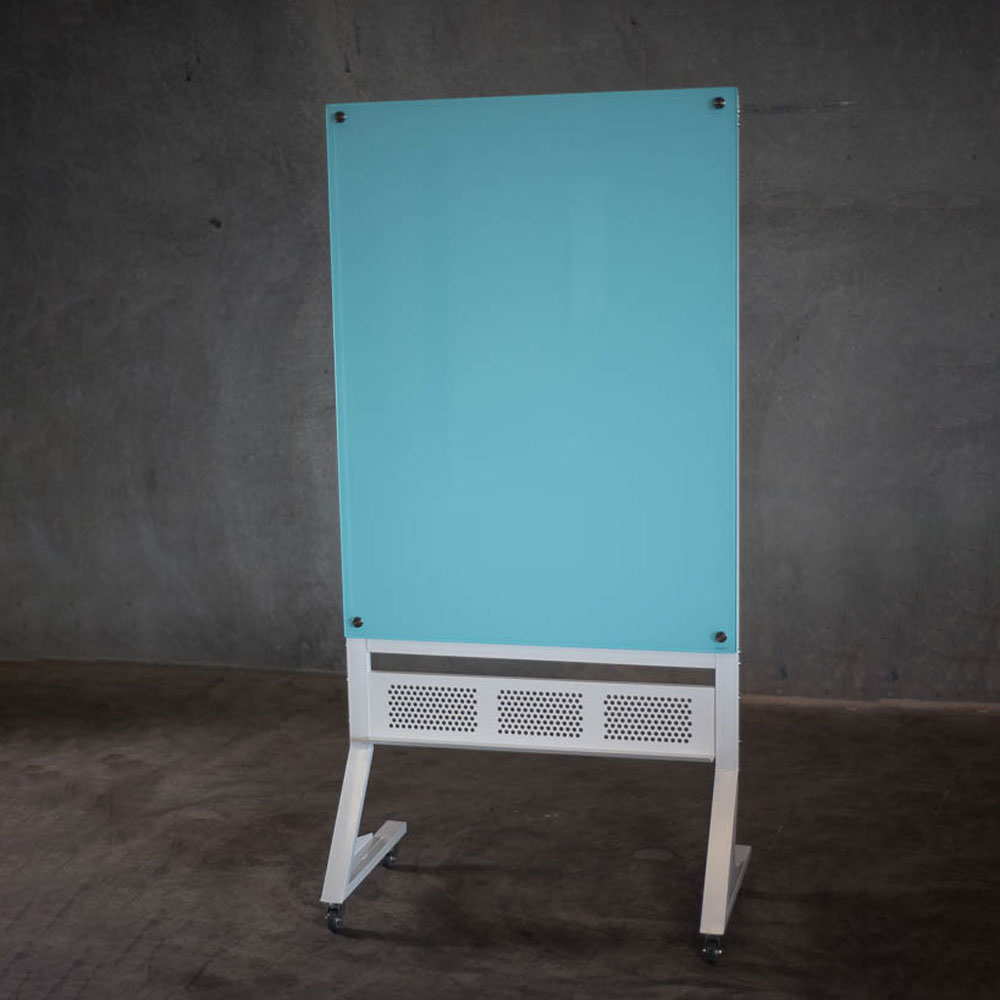
Mobile Magnetic Whiteboards
A mobile whiteboard can move between rooms or activity areas.
This is useful for:
- Training
- Workshops
- Flexible classrooms
- Project teams
- Agile workplaces
- Temporary collaboration areas
A magnetic mobile whiteboard adds another layer of flexibility because attached materials can move with the board.

14. Double-Sided Magnetic Whiteboards Can Increase Working Area
Some mobile boards provide two usable surfaces.
This can be useful when:
- One side contains information that needs to remain visible later
- Different teams use opposite sides
- A trainer prepares content in advance
- A workshop requires several stages of information
- Printed documents need to remain attached while another surface is used
Double-sided boards can provide substantial usable area without requiring additional wall space.
For smaller rooms, however, check the overall dimensions carefully so the frame does not create unnecessary congestion.
15. When a Non-Magnetic Whiteboard Is the Better Buy
A non-magnetic whiteboard should not automatically be regarded as an inferior option.
It can be entirely appropriate when the board has one clear purpose:
writing and erasing.
Examples include:
- Small meeting rooms
- Home offices
- Temporary work areas
- Low-use training spaces
- Rooms where documents are displayed elsewhere
If no one is likely to attach material to the board, magnetic functionality may add little value.
The purchase decision should therefore focus on:
- Surface quality
- Board size
- Frequency of use
- Frame design
- Installation
- Budget
rather than specifying features that will never be used.
16. Do Not Choose on Magnetism Alone
A magnetic surface cannot compensate for choosing the wrong board in other areas.
Consider the complete specification.
Size
Will everyone in the room be able to see and use the board comfortably?
Surface
How frequently will it be written on?
Position
Is the board mounted at a practical height?
Frame
Does the frame suit the environment and installation requirements?
Mobility
Does the board need to move between rooms?
Accessories
Will magnets, trays or other accessories be required?
Usage
Will it support meetings, teaching, planning, presentations or several different activities?
The best whiteboard is the one that suits the complete workflow rather than the one with the longest feature list.
17. Common Magnetic Whiteboard Buying Mistakes
Assuming Every Whiteboard Is Magnetic
Dry-erase functionality does not automatically mean the board will accept magnets.
Confirm the specification before purchase.
Assuming Magnetic Means Porcelain
Not every magnetic board uses a porcelain writing surface.
Surface material should be checked separately.
Buying Porcelain When the Board Is Rarely Used
A premium high-use surface may not be necessary for a room where the board is used once a week.
Buying a Light-Duty Surface for a Busy Classroom
A frequently used environment may justify investing more heavily in surface durability.
Assuming Standard Magnets Work on Glass
Magnetic glassboards can require stronger specialised magnets.
Choosing a Board That Is Too Small
Magnetism does not compensate for insufficient writing area.
Forgetting About Mobile Options
A fixed board is not always the best solution for flexible training or collaborative environments.
Buying Magnetic Functionality That No One Will Use
Features should support a real requirement.
Magnetic Whiteboard Buying Checklist
Before ordering, confirm:
- Do you need to attach documents to the board?
- How frequently will magnets be used?
- How frequently will the board be written on?
- Is porcelain durability justified?
- Does the board need to be fixed or mobile?
- Is double-sided functionality useful?
- What board size suits the room?
- Will the board be used in an office or classroom?
- Do existing accessories require a magnetic surface?
- Are stronger magnets required?
- Is the board actually specified as magnetic?
- Will glassboard magnets be needed?
- Does the mounting location provide enough usable wall area?
- Will several people need to view the board simultaneously?
- Is the expected service life appropriate for the surface selected?
Conclusion
A magnetic whiteboard is the better choice when the board needs to function as both a writing surface and a flexible display area.
It can be particularly useful for offices, classrooms and training environments where people regularly attach schedules, documents, diagrams, planning cards or other visual information while continuing to write around them.
A non-magnetic whiteboard remains a practical option where the board is primarily needed for writing and erasing.
For heavily used environments, also consider the writing surface itself. A porcelain magnetic whiteboard can combine magnetic functionality with a surface designed for more demanding day-to-day use.
The best buying decision is therefore made by considering magnetism, surface type, size, usage frequency and board format together, rather than treating any one feature as the deciding factor.ed panels, acoustic ceiling panels, suspended baffles, rafts and other commercial acoustic solutions for Australian workplace and education projects.