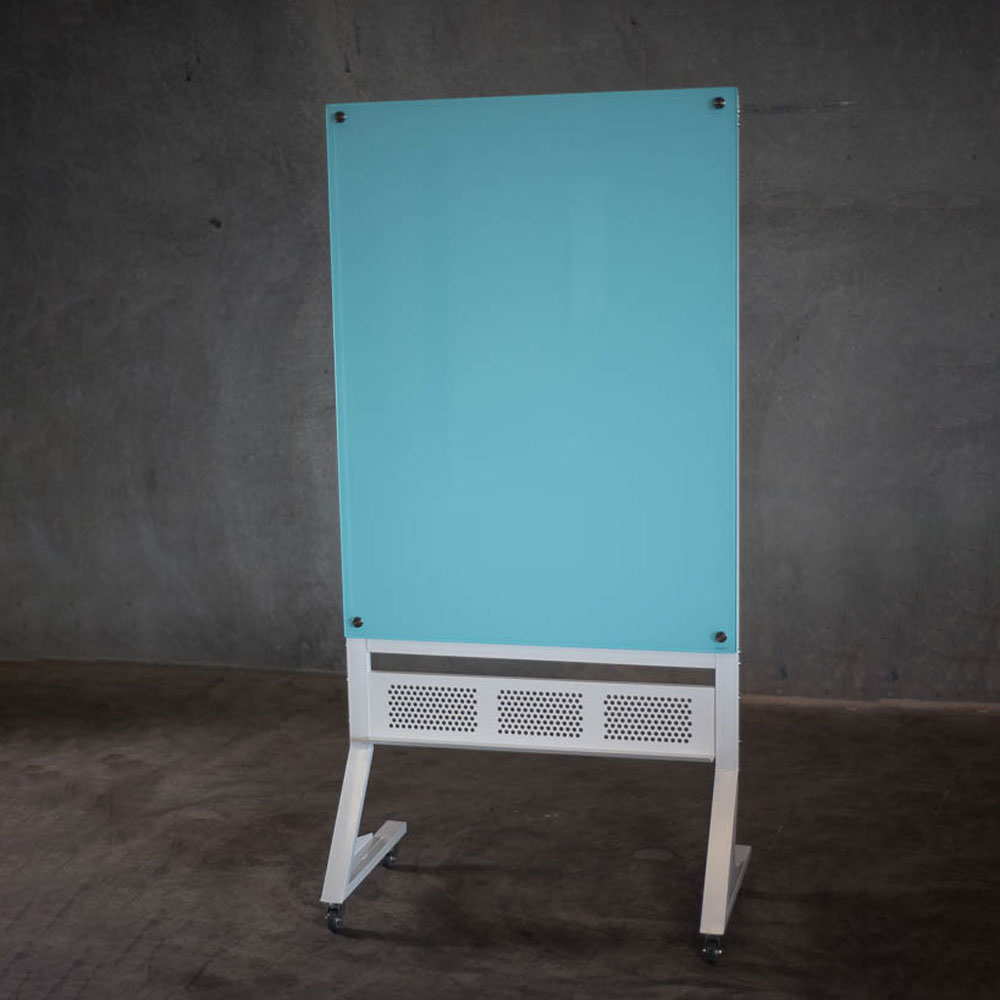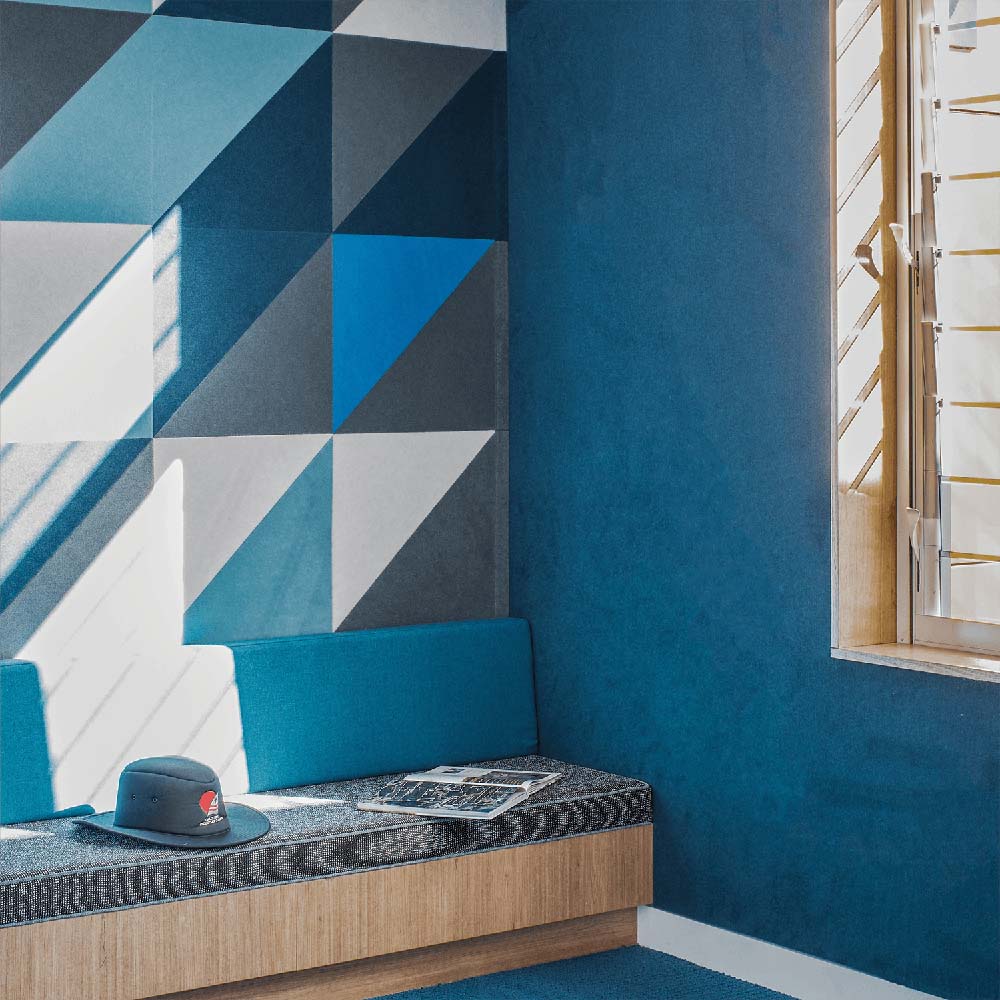
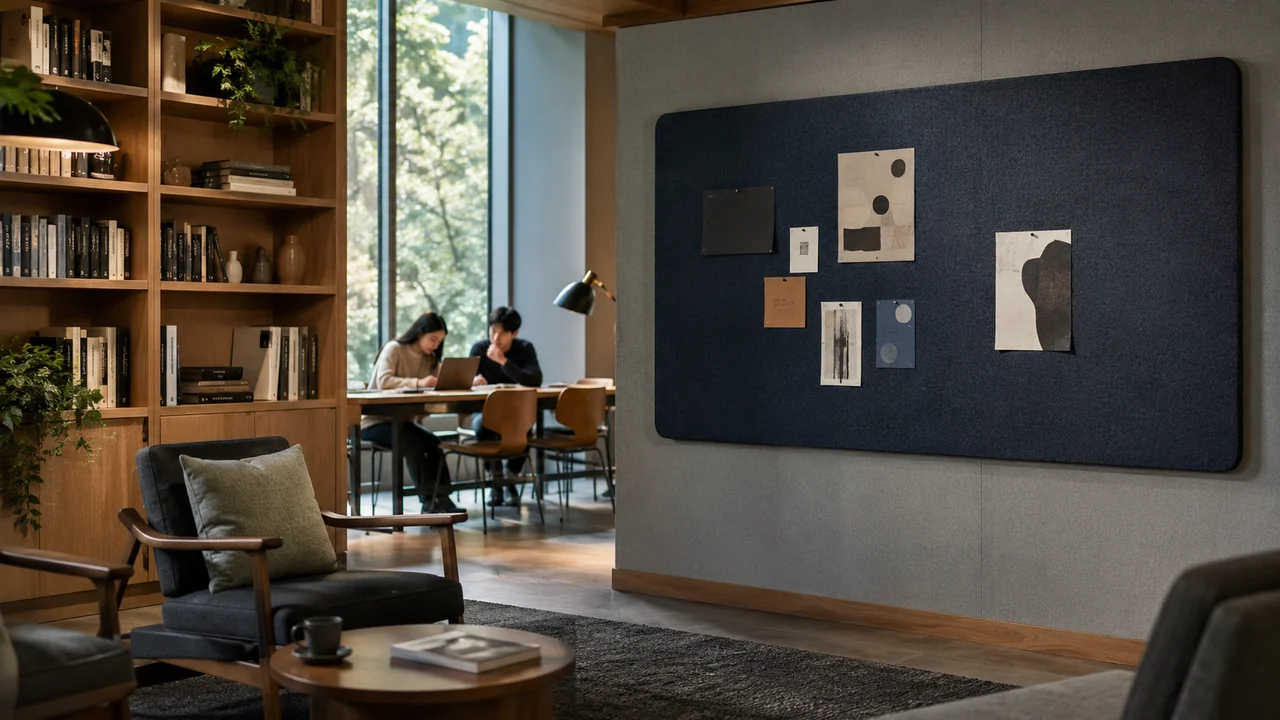
Acoustic and standard pinboards both provide reusable display space, but they serve different priorities.
A standard pinboard is generally the better choice when the main requirement is displaying notices, schedules, photographs or classroom material at a practical cost. An acoustic pinboard is more suitable when the wall also needs to absorb reflected sound and help manage reverberation within the room.
The right option depends on the acoustic conditions, display requirements, available wall area, fastening method, colour preferences and project budget. An acoustic surface provides the most value when it replaces both a conventional notice board and part of the room’s planned sound treatment.
1. Understand the Main Difference
Common standard surfaces include:
• Cork
• Compressed felt
• Commercial fabric
• Non-woven velour
• Wrapped polyester fabric
• Hook-and-loop receptive material
An acoustic pinboard uses a pinnable material that is also designed to absorb some of the sound reflecting around the room.
It can perform two functions:
• Provide a reusable notice and display surface
• Contribute acoustic absorption to the surrounding space
An acoustic pinboard does not create complete sound isolation. It cannot stop every conversation, prevent noise passing through a wall or replace appropriate building construction.
Its purpose is to help manage sound reflections inside the room while retaining practical display functionality.
Buyers can compare dedicated acoustic pinboards with the broader range of standard pinboards before selecting a surface.
2. Choose a Standard Pinboard for Display-First Applications
A conventional pinboard is usually sufficient when the project is primarily concerned with displaying information.
It may be the stronger choice when:
• The room does not have a noticeable echo problem
• Acoustic treatment already exists elsewhere
• The board occupies only a small wall area
• Budget is focused on display capacity
• Documents change frequently
• A straightforward cork or felt surface is preferred
• Several boards are required across a facility
• The board is installed in a low-noise environment
Standard pinboards work well for:
• Staff announcements
• Rosters
• Workplace policies
• School notices
• Student work
• Event information
• Photographs
• Project material
• Community notices
• Safety communication
A standard board can also provide more material and frame choices at lower entry price points than a specialist acoustic product.
Choose according to the actual display requirement rather than paying for acoustic functionality that the room does not need.
3. Choose an Acoustic Pinboard for Dual-Purpose Walls
An acoustic pinboard becomes more valuable when the room needs both information display and sound absorption.
This may apply where:
• The room contains large hard surfaces
• Speech sounds harsh or unclear
• Noise appears to linger after conversations stop
• Several people work or learn in the same space
• Wall area is limited
• A conventional pinboard would otherwise cover a potential acoustic-treatment location
• The board forms part of a broader office or classroom fitout
• Visual design and colour coordination are important
Acoustic pinboards are particularly useful where the project would otherwise require a separate pinboard installed over or beside an acoustic panel.
Suitable environments can include:
• Open-plan offices
• Classrooms
• Libraries
• Meeting rooms
• Training rooms
• Breakout areas
• Reception spaces
• Early-learning environments
• Creative studios
• Shared staff facilities
The result is a wall surface that can hold notices while remaining exposed enough to absorb reflected sound.
4. Do Not Confuse Acoustic Treatment With Soundproofing
Acoustic pinboards help manage sound within a room. They do not automatically stop noise travelling between rooms.
This distinction is important.
Acoustic Absorption
Acoustic absorption can help reduce:
• Echo
• Reverberation
• Harsh sound reflections
• Speech build-up
• Noise generated by several nearby conversations
• Reflections from glass, plasterboard and hard ceilings
Soundproofing
Soundproofing is intended to limit sound transmission through:
• Walls
• Doors
• Windows
• Ceilings
• Floors
• Gaps and penetrations
A room where voices are difficult to understand may benefit from acoustic absorption.
A room where private conversations can be heard clearly next door may require construction, sealing or specialist sound-isolation work instead.
Do not purchase acoustic pinboards based on an expectation of complete privacy or silence.
5. Compare the Surface Materials
The visible finish affects pinning, maintenance, appearance and fastening compatibility.
Cork Pinboards
Cork is familiar and straightforward.
It provides:
• Easy use with standard push pins
• A natural appearance
• Practical everyday notice display
• Clear contrast against white paper
• Cost-effective options
• Suitability for offices, schools and community facilities
Cork is generally selected for display functionality rather than acoustic performance.
Felt Pinboards
Felt provides a uniform commercial surface.
It can offer:
• Reliable pin resistance
• Neutral grey or coloured finishes
• A clean office or classroom appearance
• Suitability for repeated notice display
• Practical commercial value
Standard feltboards may contain a thin display surface over a backing board. The construction should not automatically be assumed to provide meaningful acoustic absorption.
Fabric and Velour Pinboards
Fabric pinboards can provide:
• Broader colour choice
• A contemporary appearance
• Framed and frameless options
• Pin compatibility
• Hook-and-loop compatibility on selected products
• Coordination with office and education interiors
Some fabric boards are acoustic. Others are conventional pinboards with decorative fabric surfaces.
Polyester Acoustic Pinboards
Acoustic pinboards commonly use thicker polyester-based material designed to remain exposed to the room.
Potential advantages include:
• Pinnable construction
• Sound absorption
• Colour selection
• Lightweight handling
• Custom sizing
• Slimline framing
• Compatibility with modern commercial interiors
Check the individual product data rather than judging acoustic performance from the appearance of the fabric.
6. Compare Pin and Velcro Compatibility
The required fastening method should be confirmed before choosing either board type.
Pins
Pins are appropriate for:
• Paper notices
• Photographs
• Thin card
• Rosters
• Calendars
• Student work
• Lightweight planning material
Consider:
• Surface thickness
• Recommended pin length
• Number of sheets attached
• Frequency of repositioning
• Whether the surface shows repeated pinholes
A thicker acoustic surface may allow greater pin penetration than a thin conventional board, but the approved fastening method still needs to be checked.
Hook-and-Loop Fasteners
Hook-and-loop fastening can suit:
• Laminated learning resources
• Reusable headings
• Project cards
• Larger posters
• Exhibition material
• Frequently repositioned displays
Some acoustic fabrics and velour surfaces accept compatible hook fasteners directly.
Not every felt or fabric board provides this function. Confirm the product specification before purchasing Velcro accessories.
Staples
Selected wall-covering products may accept staples, but this does not apply to every framed board.
Use only approved fastening methods to avoid damaging the face material or underlying wall.
7. Assess the Room Before Paying for Acoustic Performance
An acoustic pinboard should be selected because the room will benefit from absorption, not simply because the product sounds more advanced.
Inspect the space for:
• Glass partitions
• Large windows
• Concrete floors
• Hard ceilings
• Painted plasterboard
• Timber or laminate furniture
• Large whiteboards
• Minimal soft furnishings
• Several simultaneous conversations
• High ceilings
• Open connections to adjoining areas
Rooms with many hard surfaces tend to produce more reflected sound.
Rooms containing carpet, curtains, upholstered seating and acoustic ceilings may already have more absorption.
Listen during normal use rather than assessing the empty room only. A quiet space can become acoustically difficult once employees, students or customers are present.
Where the problem is significant or the room is large, review the broader range of wall acoustic panels rather than expecting one pinboard to treat the entire space.
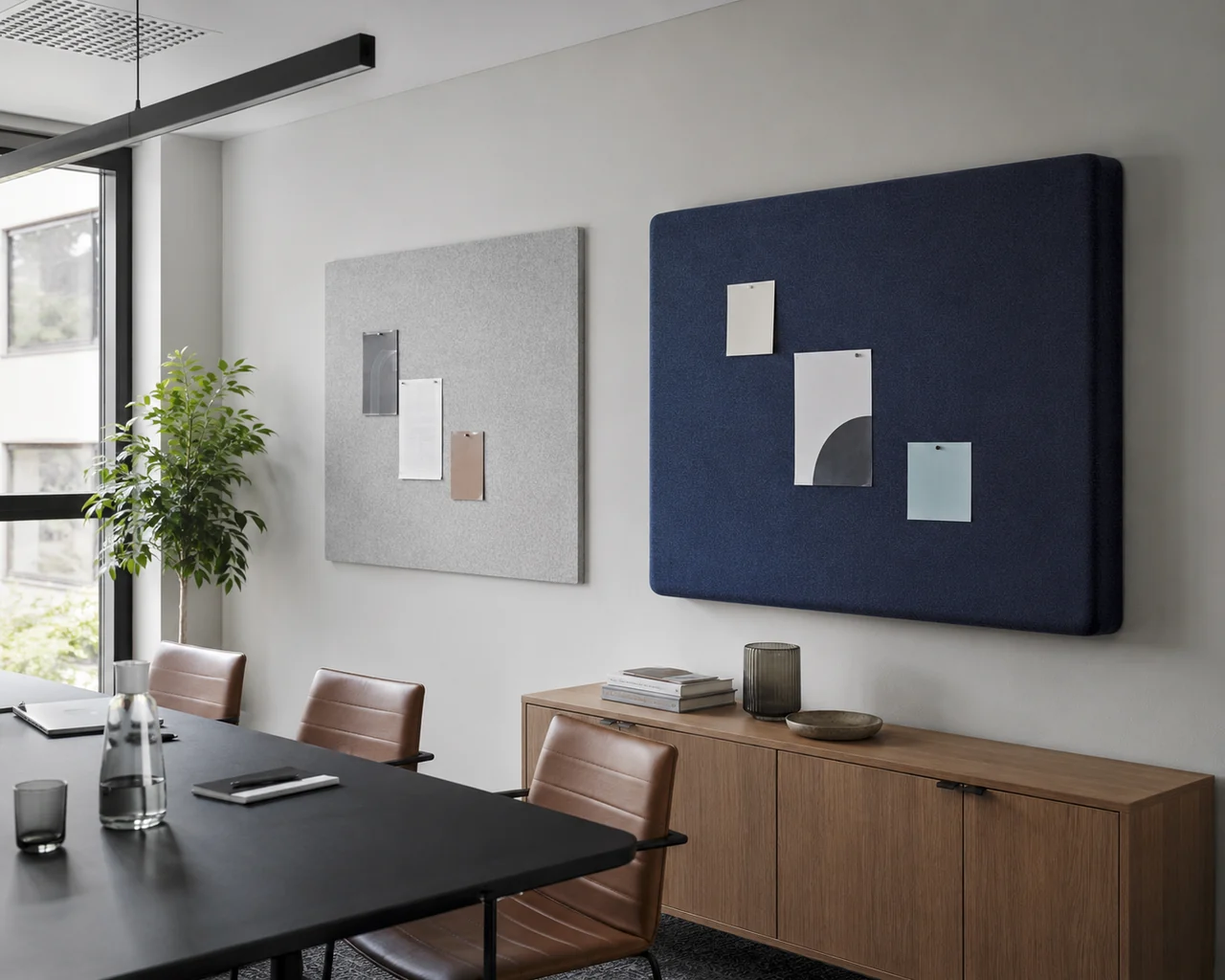
8. Calculate How Much Wall Area the Pinboard Will Cover
The amount of exposed acoustic material influences how much the board can contribute to the room.
Record:
• Board width
• Board height
• Total face area
• Number of boards
• Gaps between boards
• Areas covered by documents
• Furniture placed in front
• Distance from the main sound sources
• Other acoustic products in the room
Calculate the face area using:
Width × height = surface area
A 1.8-metre-wide board that is 1.2 metres high provides 2.16 square metres of face area.
A small acoustic pinboard may improve the immediate wall while providing limited influence in a large open office. Several coordinated boards or a larger acoustic wall treatment may be more appropriate.
Documents also cover part of the surface. A board permanently concealed beneath overlapping posters has less exposed acoustic material than a lightly used display.
Allow enough board area for the required notices without covering every section.
9. Compare Framed, Frameless and Full-Wall Options
Acoustic pinboards are available in several installation styles.
Slimline Framed Boards
A slimline acoustic pinboard can provide:
• Defined edges
• A clean commercial finish
• Straightforward wall positioning
• Multiple standard sizes
• Portrait or landscape use
• Custom-size options on selected products
The Slimline Acoustic Pinboard is an example of a framed pinnable surface intended to combine notice display with acoustic treatment.
Frameless Panels
Frameless acoustic panels provide a softer feature-wall appearance.
They can be arranged:
• As one large panel
• In aligned rows
• In mixed colours
• With deliberate gaps
• Around screens and joinery
• As modular design elements
Frameless edges should be protected from repeated impact in busy spaces.
Peel-and-Stick Tiles
Self-adhesive acoustic tiles provide a modular option for compatible wall surfaces.
They can suit:
• Retrofit projects
• Small offices
• Classrooms
• Study areas
• Feature walls
• Rooms requiring flexible colour layouts
The peel-and-stick acoustic panel range includes pinnable modular tiles that can be arranged across a selected wall area.
Acoustic Wall Fabric
Roll-based acoustic fabric can create a broad, continuous pinnable surface.
It may suit:
• Full classroom walls
• Libraries
• Creative studios
• Large notice areas
• Commercial feature walls
• Projects requiring minimal visual joins
This format requires more detailed wall preparation, measurement and installation planning than a single framed board.
10. Match the Board to the Environment
Open-Plan Offices
An acoustic pinboard can provide:
• Project display space
• Team notices
• Visual planning
• Colour coordination
• Local wall absorption
• A softer finish than bare plasterboard
Place it near the work or collaboration zone rather than on a distant wall with little connection to the sound source.
Meeting Rooms
A pinboard can hold:
• Agendas
• Reference documents
• Project plans
• Workshop cards
• Printed diagrams
Acoustic construction is useful where glass walls, hard tables and conventional ceilings create excessive reflections.
Do not position the board where a television, whiteboard or video-conferencing screen blocks it.
Classrooms
Acoustic pinboards can combine:
• Student displays
• Lesson resources
• Timetables
• Visual learning material
• Classroom colour
• Sound absorption
A large pinnable acoustic wall may provide greater value than several small decorative boards where extensive student work is displayed.
Libraries
Libraries benefit from surfaces that support quiet study, displays and changing information.
Acoustic pinboards can be used for:
• Event notices
• Reading lists
• Community information
• Study resources
• Exhibition material
• Localised acoustic treatment
Early-Learning Spaces
Colourful pinnable acoustic surfaces can support:
• Artwork
• Activity resources
• Parent notices
• Learning displays
• Visual room zoning
Installation height, fastener suitability and access should be assessed for the intended users.
Reception and Shared Areas
Acoustic pinboards can display announcements while adding texture and colour to otherwise hard commercial interiors.
Use a lockable display case instead where notices require protection from handling, weather or unauthorised changes.
11. Consider Colour and Interior Integration
A pinboard can occupy a substantial area of the wall, so colour should be considered as part of the room rather than selected from a small screen image alone.
Neutral tones can:
• Blend with existing interiors
• Remain suitable after furniture changes
• Reduce visual competition
• Provide a professional background for documents
Stronger colours can:
• Reinforce branding
• Identify departments
• Support classroom themes
• Define activity zones
• Create a feature wall
• Add warmth to hard interiors
Before ordering:
• Review physical samples where possible
• Check colours under the room’s lighting
• Compare samples with flooring and furniture
• Confirm colour availability across all required products
• Consider how documents will contrast against the surface
• Check whether future matching panels may be required
A dark surface may make light paper stand out clearly. A very bright surface can compete with the information displayed.
12. Compare Standard and Custom Sizing
Standard sizes are generally the simplest choice where the available wall and display volume match an existing product.
Custom sizing may be worthwhile when:
• The board must fit between joinery
• A long wall requires continuous coverage
• Standard dimensions leave awkward gaps
• The board must align with furniture
• A portrait format is required
• Several coordinated boards are planned
• The board forms part of an acoustic treatment layout
• A specific display capacity is required
The custom pinboard range includes made-to-measure options for workplaces and education environments.
Before approving a custom acoustic pinboard, provide:
• Exact wall measurements
• Required orientation
• Board location
• Preferred colour
• Frame preference
• Display requirements
• Wall photographs
• Furniture positions
• Delivery access
• Installation details
Custom products should be checked carefully before manufacture because changing their dimensions later may not be practical.
13. Plan Installation and Wall Compatibility
The mounting method depends on the board format.
Framed Acoustic Pinboards
Check:
• Board weight
• Wall material
• Fixing positions
• Frame depth
• Installation height
• Basic hardware supplied
• Number of installers required
• Furniture clearance
Peel-and-Stick Acoustic Tiles
Check:
• Wall-surface compatibility
• Paint condition
• Dust and contamination
• Required primer
• Tile direction
• Layout alignment
• Whether removal may affect the wall finish
Self-adhesive products should not automatically be treated as temporary. Commercial adhesives may form a strong bond.
Acoustic Wall Fabric
Check:
• Wall preparation
• Joining method
• Trimming requirements
• Power outlets and switches
• Corners and reveals
• Installer experience
• Batch and colour consistency
Delivery Access
Large framed boards need to pass through:
• Doorways
• Corridors
• Lifts
• Loading areas
• Stairwells where appropriate
Measure the access route as well as the installation wall.
14. Compare Long-Term Value
A standard pinboard generally provides better value where the project needs straightforward display capacity.
An acoustic pinboard can provide better long-term value when it replaces two separate requirements:
• A notice board
• Acoustic wall treatment
Assess:
• Purchase cost
• Required wall area
• Display capacity
• Acoustic contribution
• Installation cost
• Surface durability
• Colour and customisation
• Maintenance
• Expected room changes
• Whether separate acoustic treatment would otherwise be purchased
A low-cost standard board can be the correct choice for a quiet storeroom or small staff area.
An acoustic pinboard may be the more efficient specification for a glass-heavy meeting room, busy classroom or open collaborative workspace.
15. Avoid Common Acoustic Pinboard Buying Mistakes
Assuming Every Fabric Pinboard Is Acoustic
A decorative fabric surface does not confirm sound-absorbing construction.
Expecting Complete Soundproofing
Acoustic pinboards manage reflected sound within the room. They do not create an isolated enclosure.
Buying Too Little Surface Area
One small panel may provide useful display space without materially changing a large room.
Covering the Entire Surface With Paper
Documents reduce the amount of exposed acoustic material.
Choosing by Colour Alone
Confirm pinnability, acoustic construction, size, mounting and fastening compatibility.
Ignoring Other Reflective Surfaces
A room with a hard ceiling and extensive glass may require more than wall-mounted pinboards.
Installing Panels Behind Furniture
Large cabinets and shelving can block the surface from the room.
Assuming Peel-and-Stick Means Easily Removable
Check the adhesive and wall requirements before installation.
Ordering Custom Sizes Without Checking Access
A board that fits the wall may not pass through the building.
Skipping Physical Colour Samples
Screen colours can differ from the finished material under site lighting.
Final Acoustic Pinboard Checklist
Before ordering, confirm:
• Primary display requirement
• Acoustic problem being addressed
• Standard or acoustic construction
• Required board area
• Exposed acoustic surface after notices are added
• Pin requirements
• Hook-and-loop requirements
• Cork, felt, fabric or polyester surface
• Framed, frameless, tiled or wall-covering format
• Standard or custom dimensions
• Portrait or landscape orientation
• Colour and document contrast
• Wall compatibility
• Installation method
• Furniture and equipment clearance
• Doorway and lift access
• Existing wall and ceiling treatment
• Need for broader acoustic assessment
• Cleaning requirements
• Project budget

Conclusion
Choose a standard pinboard when the project primarily needs practical notice display and the room does not require additional acoustic treatment.
Choose an acoustic pinboard when the same wall needs to support communication and absorb reflected sound. This is particularly useful in offices, classrooms, libraries, meeting rooms and shared spaces containing extensive hard surfaces.
The final decision should be based on the room’s acoustic conditions, required display area, fastening method, material, size and installation format. An acoustic pinboard provides the strongest value when its display and sound-absorption functions are both genuinely required.
For exclusive educator discounts, visit our Education Hub!