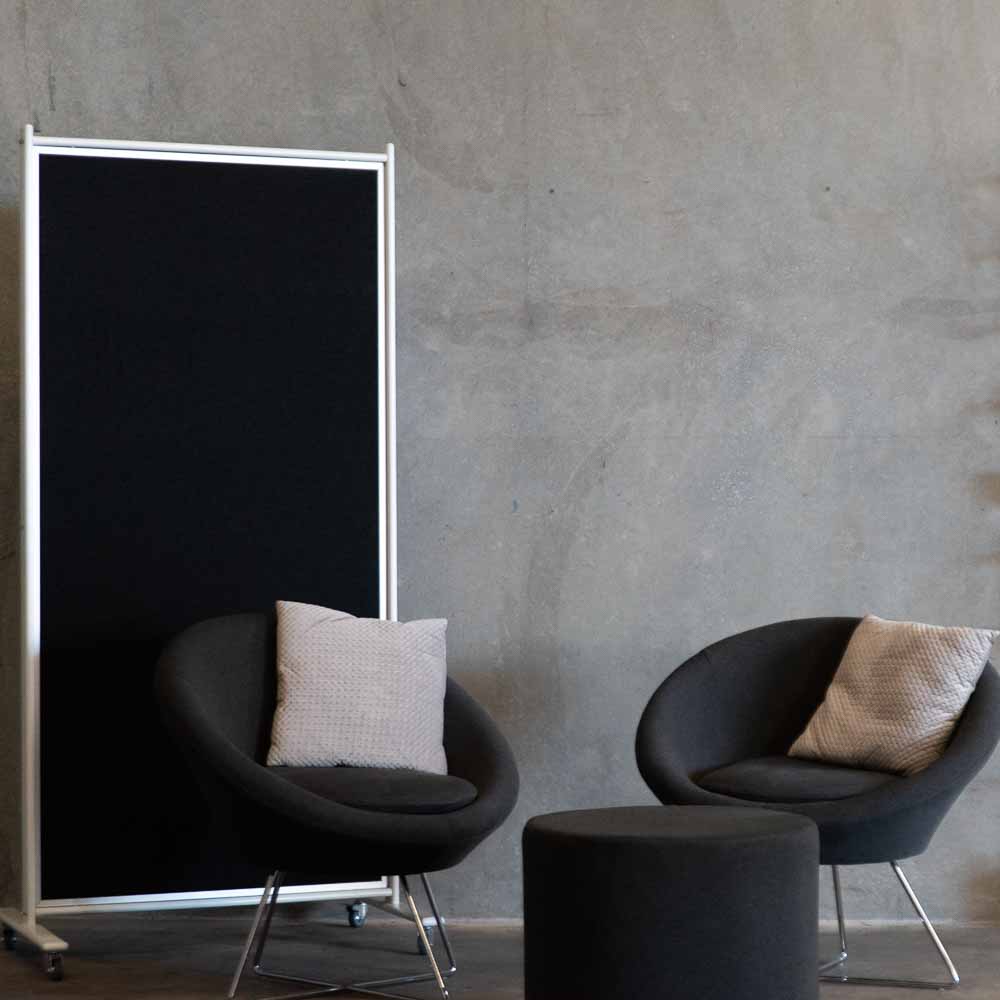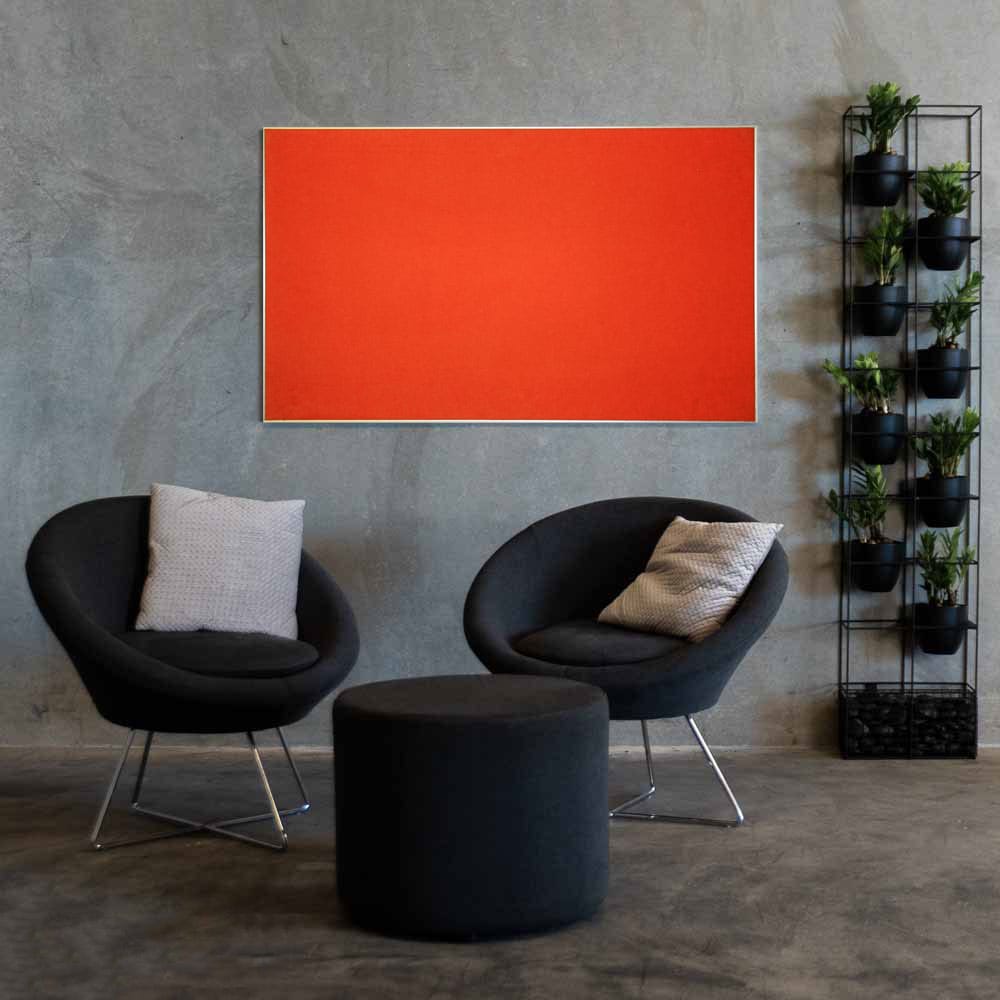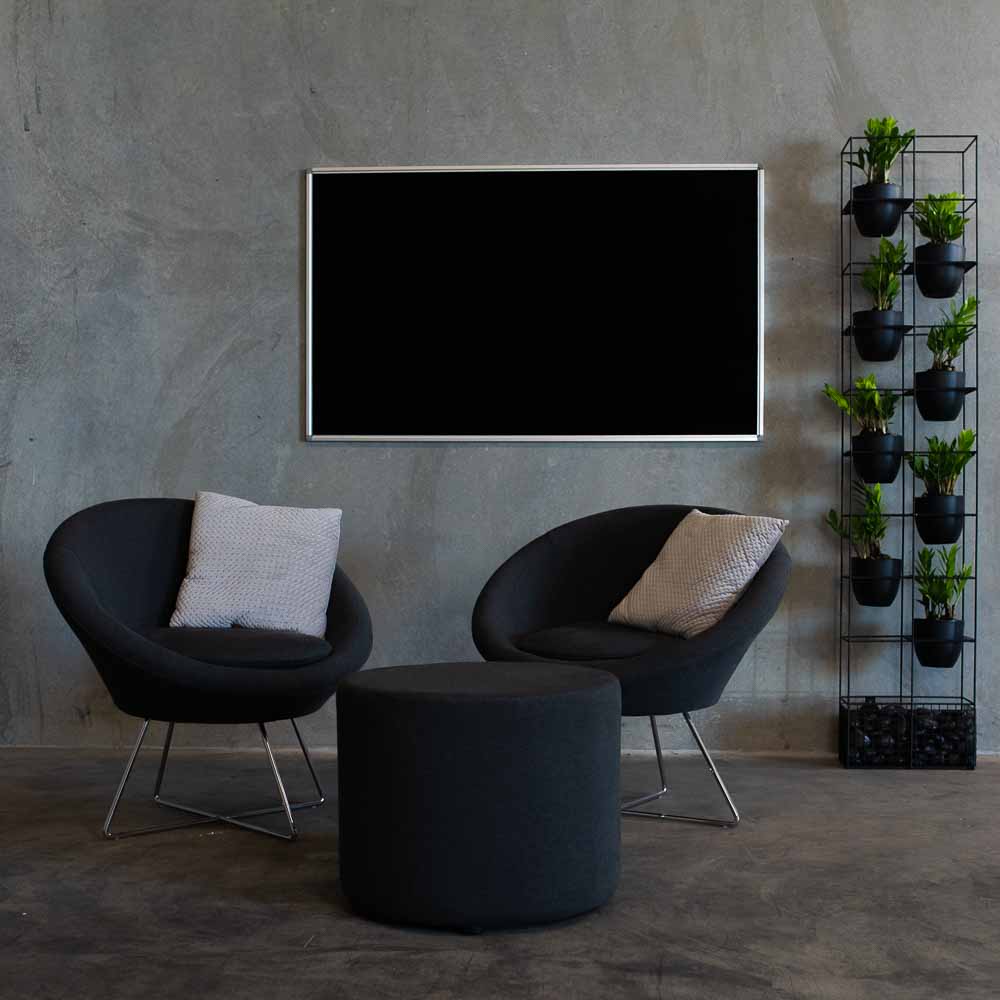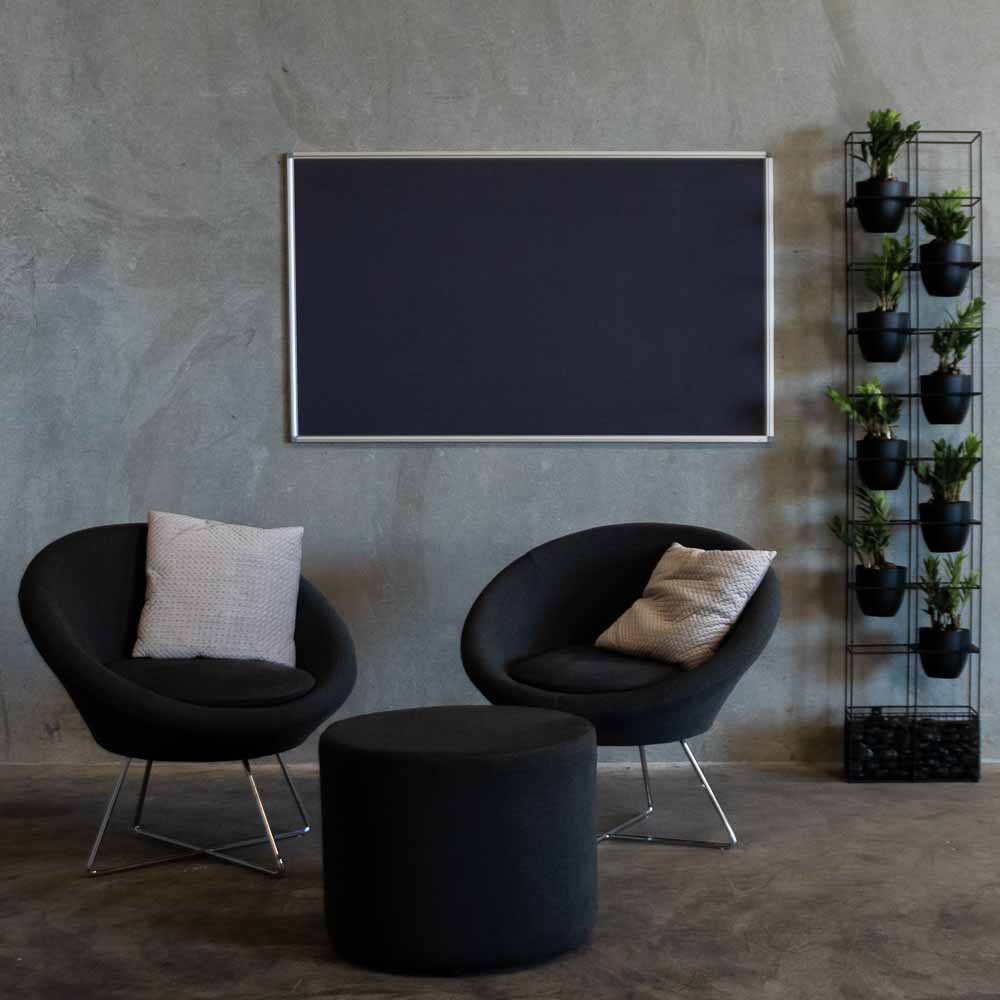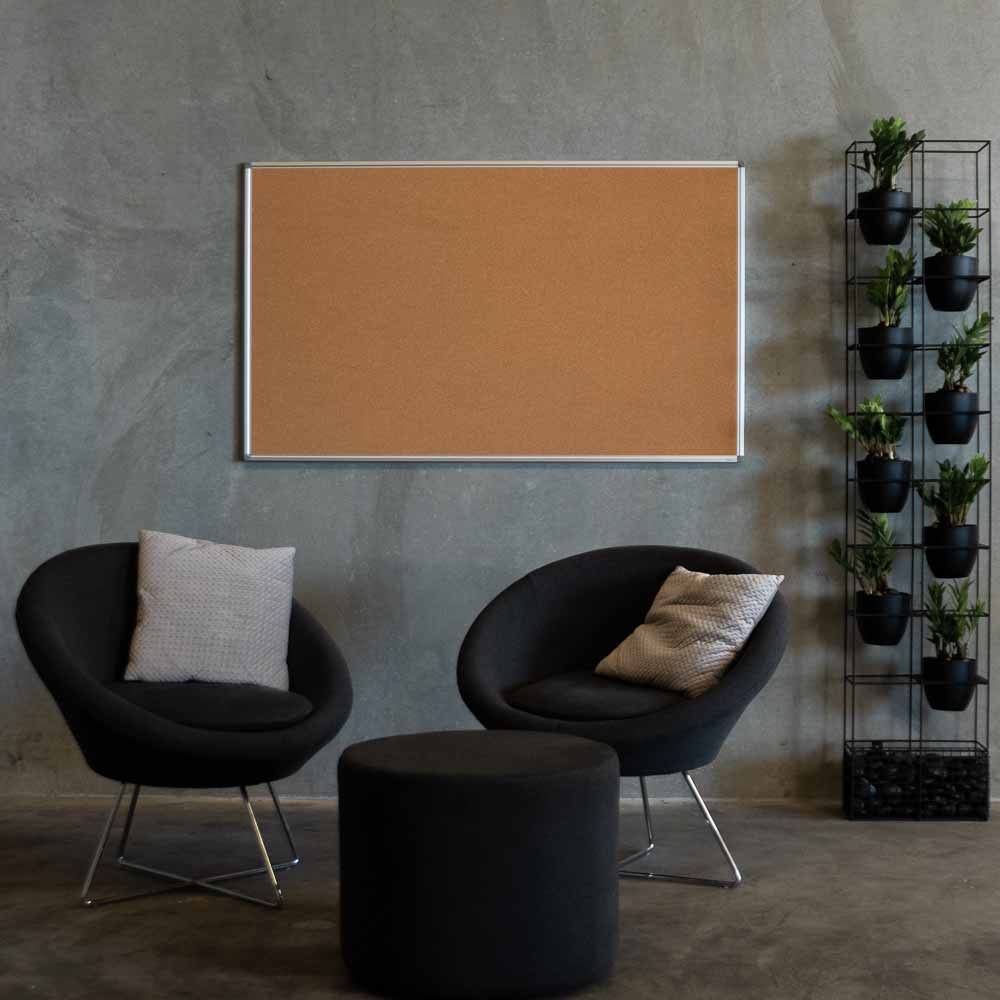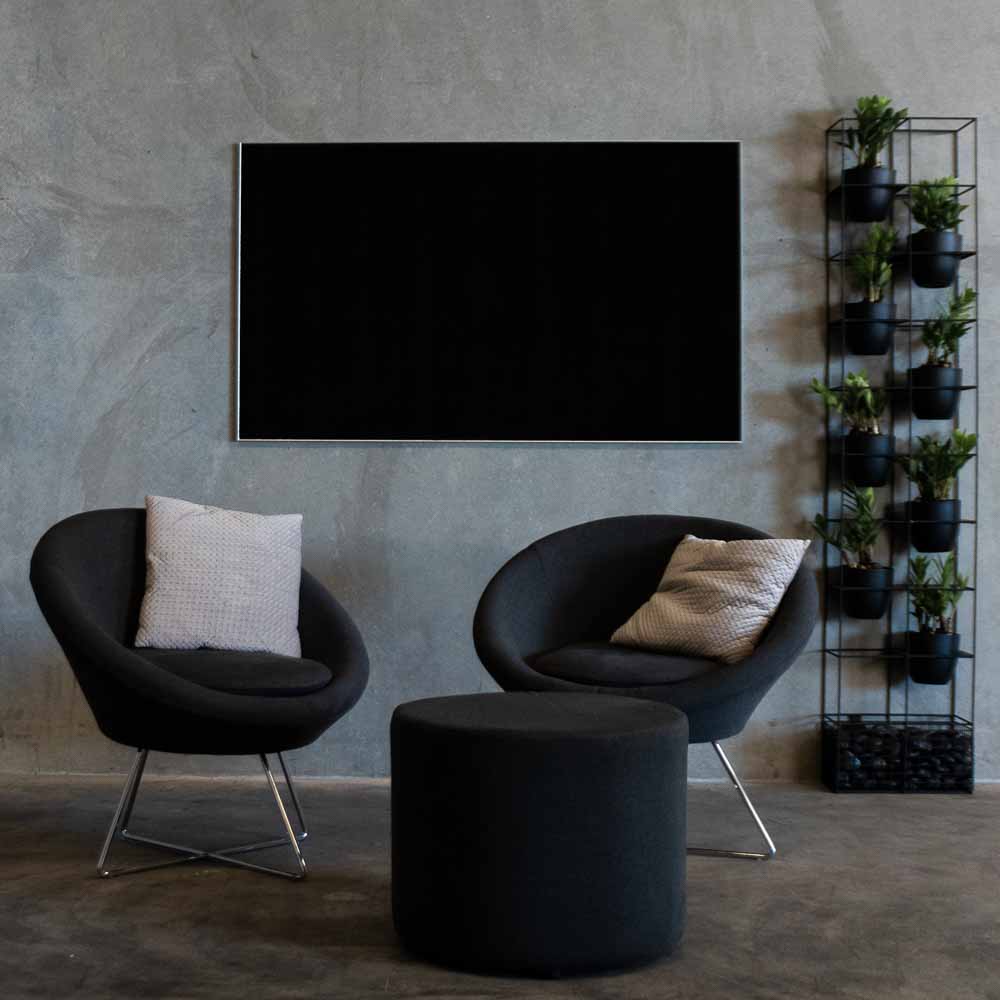

A framed pinboard is usually the more practical choice for busy shared spaces where a clearly defined edge and conventional commercial appearance are preferred. A frameless pinboard is generally better when the board needs to integrate cleanly with a contemporary interior and maximise the visual impact of its fabric surface.
A slimline framed pinboard sits between the two. It retains an aluminium edge but reduces its visual prominence, making it useful when buyers want a minimal finish without moving to a fully wrapped frameless design.
The right option depends on the room, expected use, surface material, installation requirements and the importance of appearance. Buyers can compare the complete pinboard range after defining those requirements.
1. Framed vs Frameless Pinboards at a Glance
Choose a framed pinboard when:
• A visible perimeter suits the room
• The board will be used in a busy shared area
• A traditional commercial or education appearance is appropriate
• The frame needs to coordinate with nearby whiteboards, signs or fixtures
• Straight, clearly defined edges are important
Choose a frameless pinboard when:
• A clean, contemporary appearance is the priority
• The fabric colour should remain visually dominant
• The board will form part of an interior design scheme
• Several boards may be arranged as a coordinated display
• A fully wrapped edge better suits the surrounding finishes
Choose a slimline framed pinboard when:
• You want the definition of an aluminium frame with less visual weight
• A minimal commercial finish is preferred
• The board must coordinate with modern office or classroom furniture
• A fully frameless edge is not essential
There is no universally superior format. The best pinboard is the one that suits the room and the way people will use it.
2. What Is a Framed Pinboard?
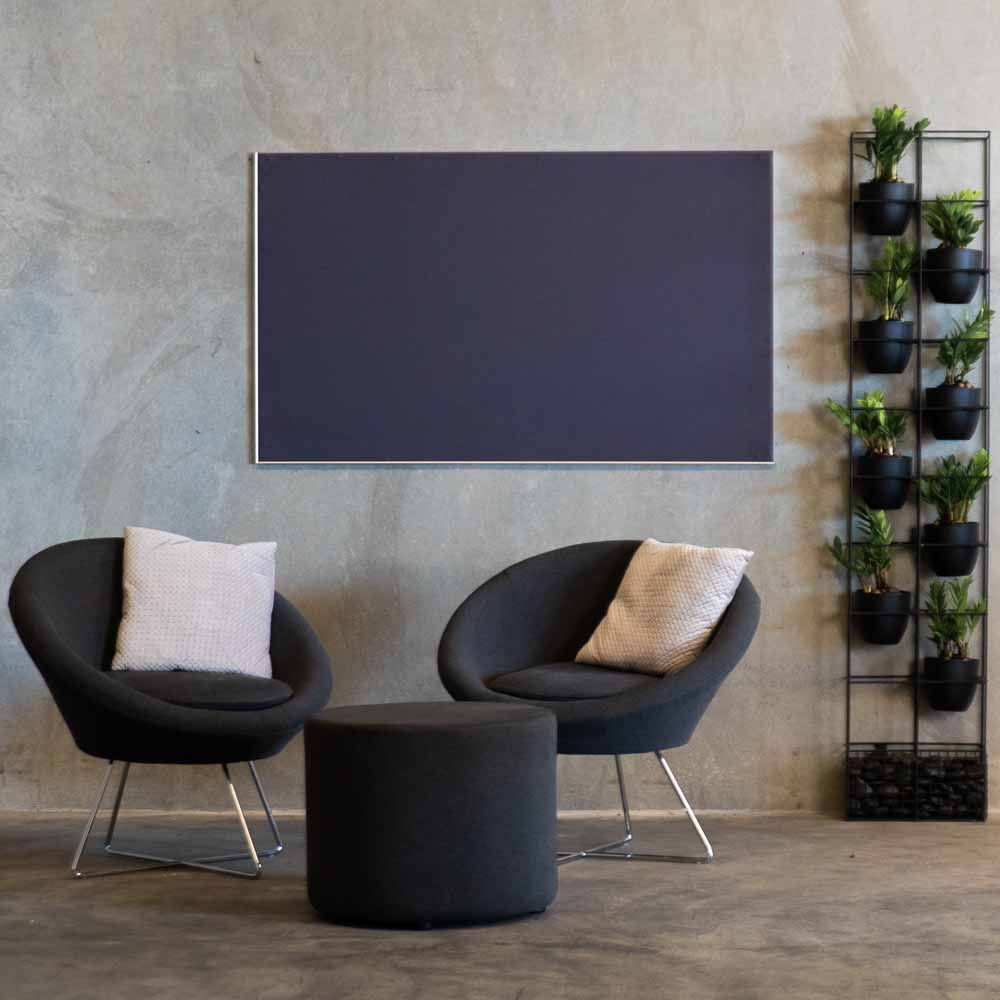
A framed pinboard has a visible perimeter—commonly aluminium—around the pinnable surface. The frame creates a defined boundary between the board and the wall.
Framed boards are familiar in:
• Offices
• Staff rooms
• Classrooms
• Libraries
• Community facilities
• Healthcare environments
• Government buildings
• Training rooms
The frame can help the board coordinate with other commercial fixtures and create a consistent appearance across multiple rooms.
However, “framed” describes the edge treatment rather than the pinning surface. A framed board may use cork, felt, fabric, velour or another pinnable material. The surface specification should therefore be assessed separately from the frame.
For example, the Autex Vertiface Framed Pinboard combines a non-woven velour surface with a 20mm-wide aluminium frame. The current product specification states that the surface accepts pins and compatible hook-and-loop fasteners, can be mounted in portrait or landscape, and is available in more than 30 colours with custom sizing options.
Those features belong to that specific product and should not be assumed for every framed pinboard.
3. What Is a Frameless Pinboard?
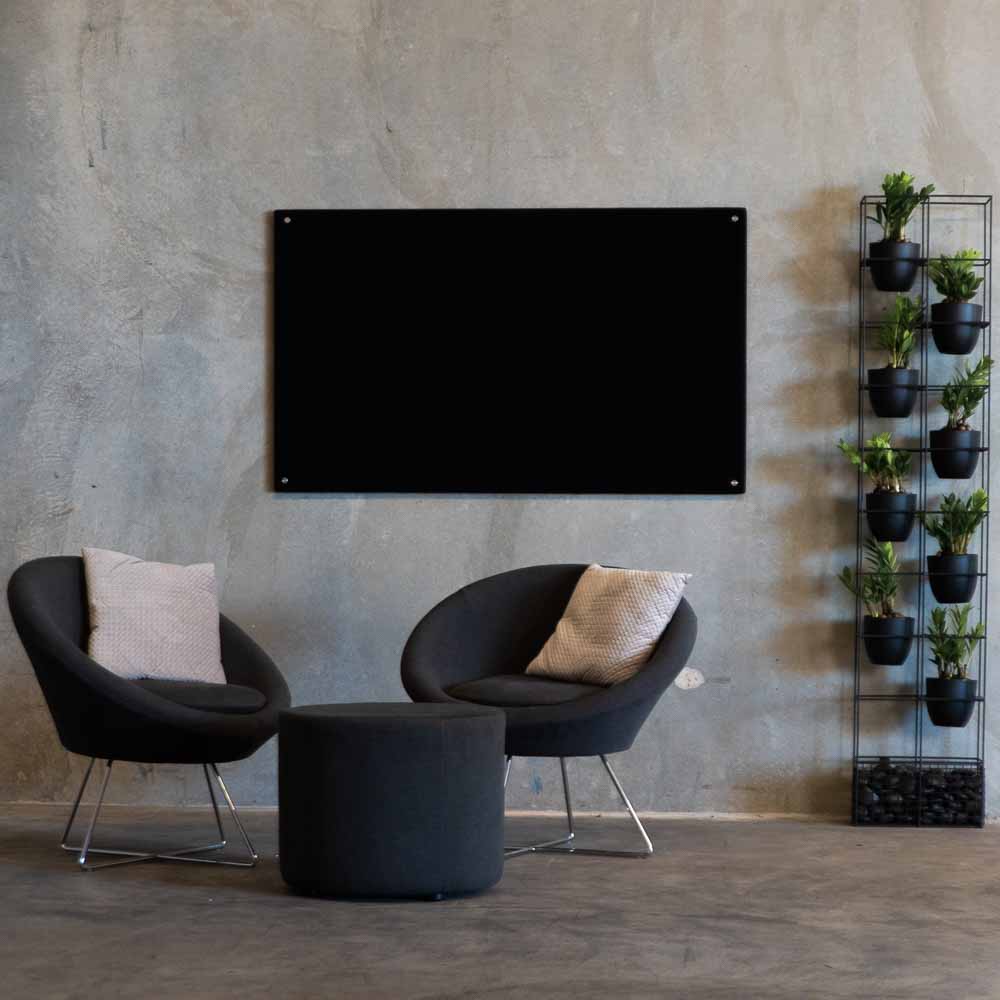
A frameless pinboard has no visible external perimeter frame. The face material usually wraps around the board edges to create a continuous fabric finish.
This style is commonly chosen for:
• Contemporary offices
• Boardrooms
• Design studios
• Reception areas
• Client-facing spaces
• Modern classrooms
• Libraries
• Breakout areas
• Project rooms
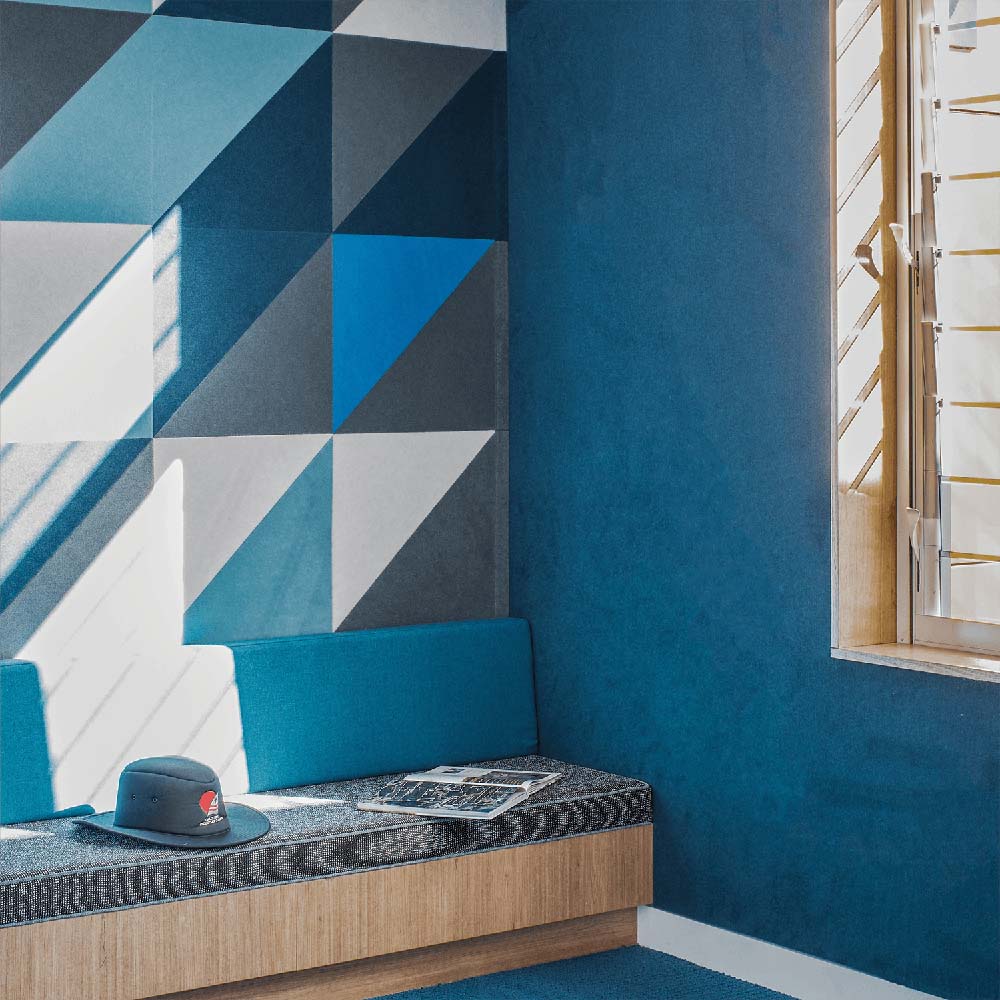
Removing the visible outer frame allows the pinboard surface to become a stronger part of the room’s colour and material palette. This can make a frameless board feel more like an integrated interior element than a conventional notice board.
Frameless does not mean unsupported or simply attached fabric. A commercial frameless pinboard remains a manufactured board with its own mounting system and finished edges. The precise construction, fixings and surface capabilities vary by product.
Whiteboards and Pinboards offers slimline and frameless pinboards for offices, education facilities and other commercial interiors.
4. What Is a Slimline Pinboard?
A slimline pinboard uses a narrow visible frame to reduce the visual weight of the perimeter.
It provides a middle option between:
• A standard framed pinboard with a more prominent edge
• A fully frameless pinboard with fabric-wrapped edges
Within the Autex Vertiface range currently offered by Whiteboards and Pinboards, the standard framed model lists a 20mm-wide by 20mm-deep frame, while the slimline model lists a 4mm-wide by 18mm-deep frame.
This comparison illustrates how a slimline frame can remain structurally visible while allowing more attention to fall on the fabric surface. Dimensions differ between brands and models, so buyers should check the individual product specification rather than treating “slimline” as a universal measurement.
5. Compare the Visual Effect
The most immediate difference between framed and frameless pinboards is appearance.
Framed Pinboards
A visible frame:
• Creates a clear border
• Separates the display from the wall
• Can coordinate with aluminium-framed whiteboards and signage
• Provides a familiar institutional or commercial appearance
• Can make a series of boards look consistent
Frameless Pinboards
A wrapped edge:
• Keeps the surface colour visually dominant
• Creates a softer, more integrated finish
• Reduces visible hardware around the perimeter
• Suits minimal and design-led interiors
• Can allow several panels to read as a coordinated wall treatment
Slimline Pinboards
A narrow frame:
• Retains a crisp aluminium edge
• Appears lighter than a standard frame
• Works with modern commercial interiors
• Offers a visual compromise between framed and frameless formats
The decision should be made in the context of the complete room. A frameless board may look refined against a clean neutral wall, while a framed board may coordinate more naturally with adjacent aluminium joinery, door frames or whiteboards.
6. Consider the Pinboard’s Location
The room often determines which finish feels appropriate.
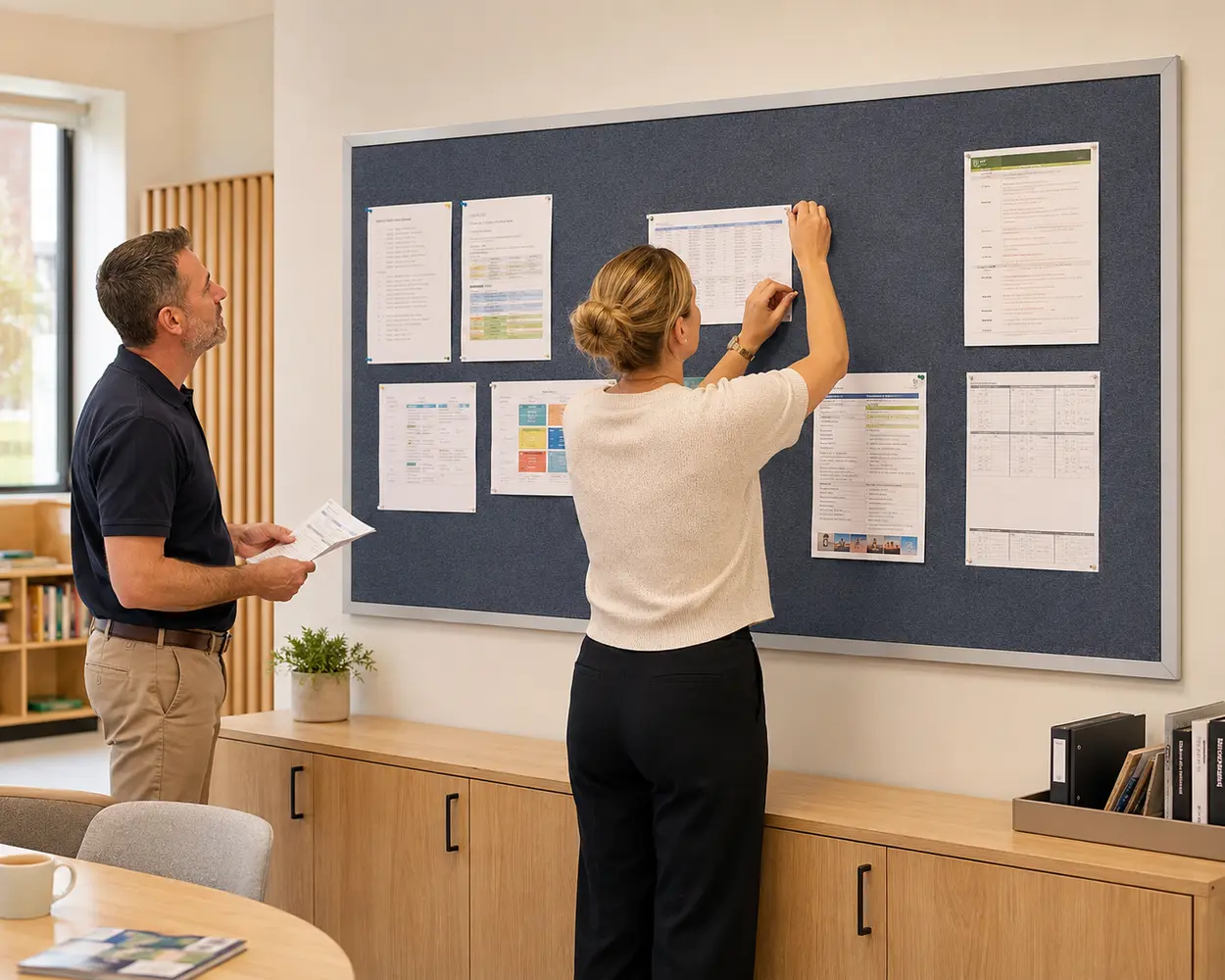
General Offices and Staff Areas
Framed boards are a practical fit for shared communication areas where staff regularly post:
• Rosters
• Policies
• Safety information
• Event notices
• Internal announcements
• Training updates
A standard frame gives the board a defined presence and can suit a functional back-of-house environment.
Frameless or slimline boards may be preferred in open-plan offices, meeting spaces and client-facing areas where the board forms part of a coordinated fitout.
Schools and Education Facilities
Both formats can work in education environments.
Framed pinboards suit classrooms, staff rooms, libraries and corridors where a conventional, clearly bounded display is preferred. Frameless boards can add colour and visual warmth to contemporary learning areas, breakout zones and administration spaces.
The surface specification is particularly important in schools. Confirm whether users require:
• Standard push pins
• Hook-and-loop fasteners
• Both attachment methods
• An acoustic-rated surface
• A custom colour
• A specific board size
Do not assume every fabric board accepts hook-and-loop fasteners simply because one product does.
Reception and Client-Facing Areas
A frameless or slimline pinboard can reduce the institutional appearance associated with a traditional notice board. This may suit reception areas that display:
• Company information
• Project photography
• Community notices
• Certifications
• Visitor information
• Event material
Keep the content curated. A premium frameless board will still look cluttered if too many mismatched documents are attached without spacing or hierarchy.
Design Studios and Project Rooms
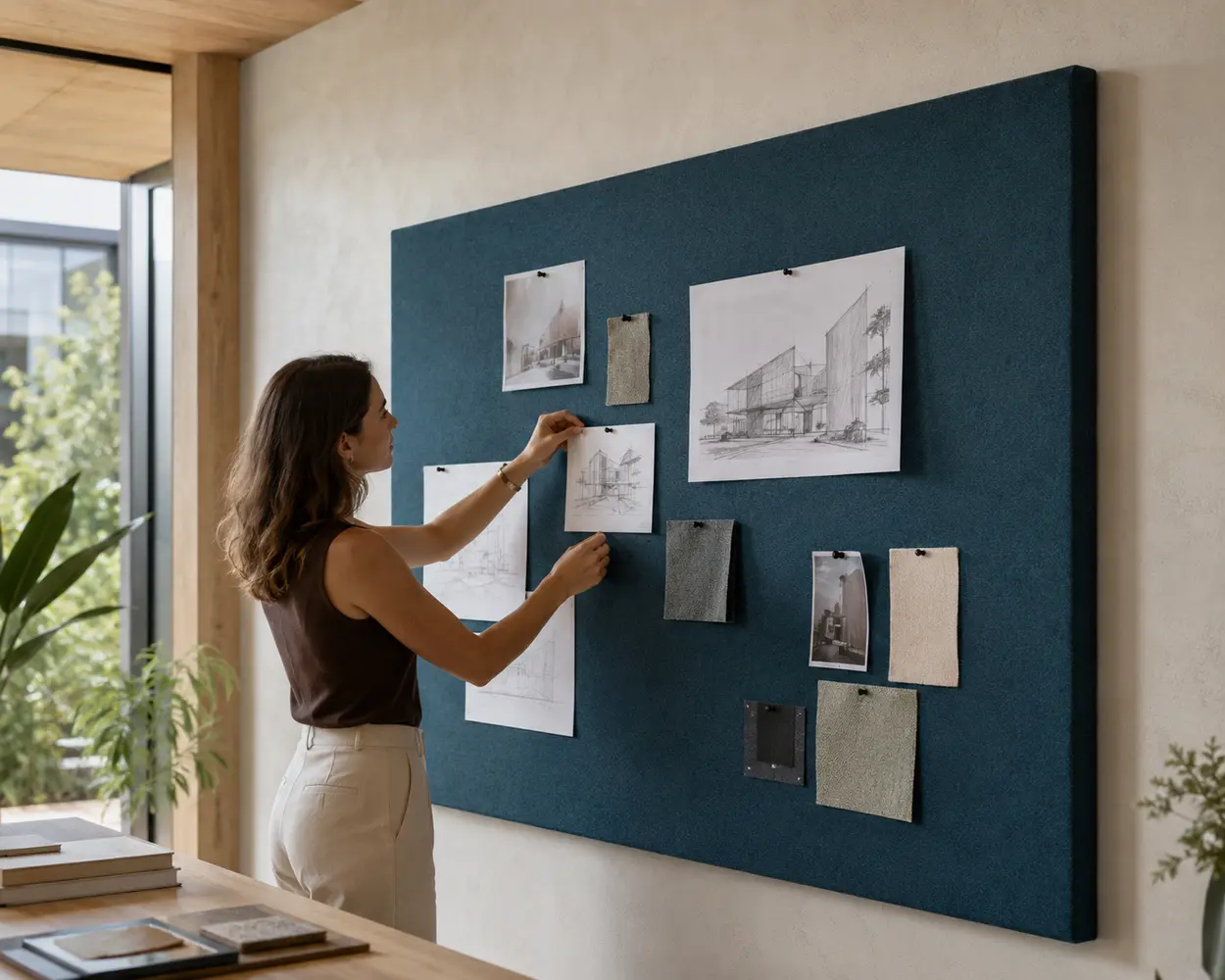
Frameless fabric boards are well suited to visual work that includes:
• Drawings
• Material samples
• Colour swatches
• Reference images
• Project plans
• Concept development
The uninterrupted fabric field can support a more integrated presentation, while a framed pinboard can provide a stronger boundary between separate projects or teams.
7. Assess Edge Exposure and Everyday Contact
Location affects how often the board edges may be touched or bumped.
A board installed in a narrow corridor, beside a doorway or above a frequently used workbench may experience more incidental contact than one mounted in a quiet meeting room.
A visible frame creates a defined perimeter around the surface. A frameless board instead relies on its wrapped-edge construction and correct installation.
This does not mean every framed board is automatically more durable than every frameless board. Durability depends on:
• Frame construction
• Surface material
• Core material
• Edge finishing
• Fixings
• Installation quality
• Frequency of use
• Position within the room
For high-traffic areas, review the manufacturer’s installation and care information rather than choosing by appearance alone.
8. Compare Usable Wall Space
Measure the complete wall area before ordering either format.
Account for:
• Doors
• Windows
• Light switches
• Power outlets
• Wall-mounted screens
• Shelving
• Joinery
• Furniture below the board
• Required reach height
• Normal viewing distance
Frame style usually has less effect on usability than choosing the correct overall board size. A board that is too small will become crowded, regardless of how refined its edges look.
Use removable painter’s tape to mark the proposed dimensions on the wall. Then stand at the normal viewing distance and check whether documents will remain legible and every part of the board will be reachable.
9. Check Installation Requirements
Framed, slimline and frameless boards all require secure installation appropriate for the product and wall.
Before ordering, confirm:
• Wall construction
• Product weight
• Mounting method
• Supplied hardware
• Recommended fixings
• Installation orientation
• Clearance around the board
• Access for lifting and positioning
• Whether professional installation is required
Do not assume a frameless board is easier to install because it has no visible outer frame. Concealed or specialised mounting systems may require careful measurement so the finished board sits straight and at the correct height.
Some products can be installed in either portrait or landscape orientation, but this must be verified on the individual product page.
If the board may need to move between rooms rather than remain permanently wall mounted, review the fixed versus mobile pinboard guide before choosing an edge style.
10. Surface Function Matters More Than the Frame
The frame determines how the perimeter looks. The surface determines how the board performs in daily use.
Depending on the product, a pinboard surface may support:
• Push pins
• Hook-and-loop fasteners
• Lightweight paper displays
• Laminated cards
• Photographs
• Material samples
• Acoustic absorption
Check the specification for the exact model because products that look similar may perform differently.
Pinning
Confirm that the surface is designed for pins and that the core provides suitable resistance. Pins should hold normal display material without excessive force.
Hook-and-Loop Compatibility
Selected fabric or velour surfaces accept compatible hook-and-loop fasteners. This can be useful for reusable learning material, project cards and larger laminated displays.
It is not a universal feature of all fabric pinboards.
Acoustic Performance
Some pinnable products are also designed to absorb reflected sound. A standard framed or frameless fabric board should not be described as an acoustic panel unless acoustic performance is supported by its technical information.
If sound control is important, evaluate acoustic data separately from the pinboard’s frame style.
11. Plan Colour and Interior Coordination
Frame choice and fabric colour work together.
A silver aluminium frame can coordinate with:
• Commercial door frames
• Whiteboard frames
• Workstation screens
• Shelving
• Signage systems
A frameless board can make the selected fabric colour feel more continuous and prominent.
When choosing colour, consider:
• Wall colour
• Flooring
• Joinery
• Upholstery
• Brand palette
• Lighting conditions
• Type of documents displayed
• Whether the board should blend in or create contrast
Dark surfaces can create a refined backdrop for pale paper, while lighter neutral boards may integrate quietly into a bright interior. Strong colours can support wayfinding, school identity or workplace zoning when used deliberately.
Request current colour information where exact matching matters. Screen colours can differ from physical materials, and ranges may change.
12. Decide Whether Custom Sizing Is Needed
Standard sizes can suit many classrooms and offices, but custom sizing may provide a better result when the board must align with:
• Existing joinery
• A bank of workstations
• Wall columns
• A specific furniture layout
• Adjacent whiteboards
• Architectural features
• A large project display
Measure the available space rather than estimating from photographs or floor plans alone.
For multiple boards, also confirm:
• Spacing between units
• Alignment of top and bottom edges
• Consistent installation height
• Colour sequence
• Frame consistency
• Access to each display area
A series of frameless boards can create a coordinated arrangement, while framed units can provide clearer separation between departments, subjects or information types.
13. Compare Whole-of-Project Value
Do not compare framed and frameless pinboards on purchase price alone.
Consider:
• Required size
• Surface material
• Standard or custom manufacture
• Frame construction
• Colour selection
• Mounting hardware
• Delivery access
• Installation
• Expected frequency of use
• Cleaning and maintenance
• Replacement timeframe
A lower-priced board can be poor value if it is too small, uses the wrong surface or does not suit the room. A higher-specification board can also be unnecessary when a simple framed board will perform the required task effectively.
The aim is to specify the least complex product that fully satisfies the functional and visual brief.
14. Avoid Common Buying Mistakes
Choosing Only by Appearance
A frameless board may look ideal but still be unsuitable if the surface does not support the required fastening method.
Assuming Frameless Means Acoustic
Frame style does not confirm acoustic performance. Check the technical specification.
Assuming Every Fabric Surface Accepts Hook-and-Loop Fasteners
Only use hook-and-loop accessories where compatibility is stated.
Ignoring the Wall Construction
The board and mounting system must suit the installation surface.
Buying Too Small
Allow space between documents so the display remains readable.
Treating “Slimline” as a Standard Measurement
Frame dimensions vary between manufacturers and models.
Forgetting Colour Samples
Digital representations may not accurately show the material under the room’s lighting.
Mixing Frame Styles Without a Plan
Using standard framed, slimline and frameless boards together can look inconsistent unless the variation is deliberate.
Overlooking Delivery and Installation
Large boards may require suitable lift, corridor and doorway access before they reach the final wall.
Framed vs Frameless Pinboard Buying Checklist
Before ordering, confirm:
• Where will the board be installed?
• Is the area client-facing or back-of-house?
• Is a traditional, minimal or fully wrapped edge preferred?
• Would a slimline frame provide the right compromise?
• What overall dimensions fit the wall?
• Can every part of the board be reached safely?
• Will users attach paper, card, photographs or material samples?
• Are pins, hook-and-loop fasteners or both required?
• Is verified acoustic performance required?
• Does the surface colour suit the interior?
• Is a physical colour sample needed?
• Is a standard size suitable?
• Is custom sizing required?
• Can the product mount in the preferred orientation?
• What fixings suit the wall construction?
• Is professional installation required?
• Can the board reach the room through doors, corridors and lifts?
• Will multiple boards need consistent frames, colours and alignment?
Conclusion
Choose a framed pinboard when you want a clearly defined perimeter, a familiar commercial appearance and easy coordination with other aluminium-framed fixtures.
Choose a frameless pinboard when a clean, integrated appearance and uninterrupted fabric finish are more important to the interior design.
Choose a slimline framed pinboard when you want the definition of an aluminium edge with less visual prominence than a standard frame.
Whichever style you prefer, confirm the surface material, fastening compatibility, size, wall construction and installation requirements before ordering. These functional details will usually have more influence on day-to-day performance than the frame style alone.ing panels, suspended baffles, rafts and other commercial acoustic solutions for Australian workplace and education projects.